Dealing with Toxic People: Strategies for Protecting Your Mental Health

Toxic people are unfortunately a fact of life. Whether it’s a friend, family member, or coworker, we’ve all come across someone who seems to constantly bring negativity and drama into our lives. Dealing with toxic people can be difficult and draining, but there are strategies you can use to protect yourself and maintain your mental health.

Firstly, it’s important to identify toxic behaviors. Toxic people tend to be negative, and critical, and always seem to be in conflict with others. They may gossip or spread rumors, undermine your confidence, or try to control your actions. They may also be manipulative, playing on your emotions to get what they want.

Once you’ve identified toxic behaviors, it’s important to set boundaries. This can be difficult, especially if the toxic person is a friend or family member, but it’s essential for your well-being. You can start by limiting your interactions with them and avoiding conversations that involve negativity or drama. If you have to interact with them, keep your conversations light and focused on positive topics.

It’s also important to remember that toxic people often thrive on conflict and drama, so don’t engage with them when they try to bait you into an argument. Instead, take a step back and remind yourself that their behavior is not a reflection of you. Focus on your own goals and priorities, and don’t let their negativity derail your progress.

Another important strategy is to surround yourself with positive influences. Seek out friends and family members who support you and lift you up, and try to spend more time with them. You can also seek out new social circles or hobbies that bring you joy and fulfillment. By focusing on positive influences, you’ll have a better perspective on life and be better equipped to deal with toxic people when they arise.

Finally, it’s important to practice self-care. Dealing with toxic people can be draining, so it’s important to take care of yourself both physically and mentally. Make sure to get enough sleep, eat a healthy diet, and exercise regularly. You can also practice mindfulness and relaxation techniques, such as meditation or yoga, to help you stay centered and focused.

In conclusion, dealing with toxic people is never easy, but it’s important to remember that you have the power to protect yourself and maintain your mental health. By identifying toxic behaviors, setting boundaries, surrounding yourself with positive influences, and practicing self-care, you can stay resilient and focused on your own goals and priorities.

Here are a few websites that may help you with toxic people and mental health issues

  1. Psychology Today – A website that offers articles and resources on psychology and mental health, including tips for dealing with toxic people.
  2. Tiny Buddha – A personal development website that provides articles and resources on mindfulness, happiness, and personal growth. They have a section specifically on toxic people and how to deal with them.
  3. The Gottman Institute – A website dedicated to improving relationships through research-based principles. They have an article on how to deal with toxic people, specifically in the context of romantic relationships.
  4. The National Alliance on Mental Illness (NAMI) – A mental health organization that provides resources and support for individuals and families affected by mental illness. They have a section on their website dedicated to dealing with difficult people.
  5. Mindful – A website that offers resources and information on mindfulness and meditation. They have an article on how to protect yourself from toxic people by cultivating mindfulness.
5 Health Benefits of Meditation: Why You Should Start Meditating Today

Meditation is a practice that has been around for thousands of years, and its popularity has been on the rise in recent times. While meditation was initially seen as a spiritual practice, it is now widely recognized for its numerous health benefits.

As someone who has been meditating for several years now, I can personally attest to the positive impact it has had on my overall health and well-being. In this blog post, I want to share with you some of the health benefits of meditation and why you should consider incorporating this practice into your daily routine.

Reduced Stress and Anxiety

One of the most well-known benefits of meditation is its ability to reduce stress and anxiety. Meditation helps you to focus on the present moment, letting go of any negative thoughts or worries about the future. It promotes a sense of calm and relaxation, which can help to lower your heart rate and blood pressure.

Improved Focus and Concentration

Meditation involves training your mind to focus on a particular object, such as your breath or a mantra. This practice can help to improve your concentration and focus, making it easier for you to stay on task and be more productive throughout the day.

Better Sleep

Meditation can also help to improve the quality of your sleep. It helps to calm your mind and reduce racing thoughts, making it easier for you to fall asleep and stay asleep throughout the night. Regular meditation can help to establish a healthy sleep routine, leading to better overall health and well-being.

Increased Self-Awareness

Meditation is a practice that involves being present and aware of your thoughts and feelings. It helps you to become more self-aware, which can lead to a better understanding of your own emotions and behaviors. This increased self-awareness can help you to make better decisions and improve your relationships with others.

Reduced Pain

Meditation has also been shown to help reduce chronic pain. By focusing your mind on something other than the pain, you can help to reduce the intensity of the pain and improve your overall quality of life.

In conclusion, meditation is a simple and effective way to improve your overall health and well-being. It can help to reduce stress and anxiety, improve focus and concentration, promote better sleep, increase self-awareness, and reduce chronic pain. Incorporating meditation into your daily routine doesn’t require a significant time commitment, and it can be done anywhere, making it a convenient practice to incorporate into your daily life. So why not give it a try? Your mind and body will thank you.

The battle between the self-centered and benevolent sides of our ego

Oh, how easy it is to get lost in your own mind, caught in worries, and in your own insecurities. To be locked in a never-ending cycle of what if, why me, and life isn’t fair. We tend to be stuck in a tunnel view of life at times. It is so easy to fall into the trap of seeing things as always about ourselves or that the world is against us. I think everyone deals with such thoughts and feelings from time to time, and that is okay I think. But being constantly stuck in that train of thought is unhealthy and it keeps us from moving forward and from enjoying life.

Life is about everyone and everything around us, we are not the center of the universe though it is easy to feel like the center of things. I believe it is human nature to be somewhat self-centered, It is part of the self-preservation mechanism within us all. I do not think it is even possible to be totally selfless, though I do think we can reach a pretty high percentage of being such. But then again there are known mental illnesses such as the martyr syndrome and so on that may make one appear more so selfless and other mental illnesses that can cause the opposite effect.

I think people should regularly check themselves, see how they treat others, and how they react to being treated by others as well. Since how one person acts and treats others influences all those around them in one fashion or another, then we should try to be a force for good in society. We should try to lead by example, and treat others, and ourselves in a kind and compassionate manner. If more people focused on how they treated others around them, the less toxic people and environments we all would have to encounter. Being toxic and/or self-entitled is damaging to society and in the long run, will only eat away at the person being toxic and/or self-entitled.

A percentage of toxic and self-entitled people may be suffering some sort of emotional or mental illness, and we should remember that. It is best to avoid those people if you can not get through to them and set boundaries for them when it comes to your relationship. Do not allow the toxic behavior of others to bait you into being toxic yourself, you have to hold the high ground and lead by example. It is so easy to fall prey to being baited into a word battle with toxic people. They seem to enjoy causing turmoil and thrive in the toxic atmosphere.

It is not easy to try and be a good-hearted individual, to think of others as much if not more than yourself. But then anything worthwhile takes a lot of effort, and it does not only help you emotionally and mentally, but it also helps those around you. To love, have compassion for others, and be charitable are very important and are quite therapeutic in the end. When we help others we are also helping ourselves, it causes our body to produce chemicals that make us feel happy or content. The human body and brain are geared towards pleasure as a reward, reason why humans are so prone to addiction, But that’s a topic for another post.

In the end, it boils down to the battle between the self-centered and benevolent sides of our ego. When they are in balance all is good, when it tips one way or another there are complications. Either we will put ourselves before and above all others causing harm to others eventually or we will put others above ourselves to such an extent that we will neglect our own well-being. It is all about balance, and what balance is right for you as an individual.

Just some thoughts for you, not bad for me before my first cup of coffee lol.

Blessings and happiness to all

Dealing with low self-esteem

Here are some steps that may help to improve low self-esteem:

  1. Challenge negative thoughts: Start by identifying negative self-talk and replace it with positive, more realistic affirmations.
  2. Practice self-care: Engage in activities that bring you joy and help you feel good about yourself.
  3. Set achievable goals: Accomplishing small tasks can boost confidence and help improve self-esteem.
  4. Surround yourself with positive people: Seek out supportive friends and family members who will encourage and motivate you.
  5. Seek professional help: A therapist can help you understand the root causes of low self-esteem and develop effective coping strategies.

Remember, improving self-esteem is a process and it may take time to see results, but with persistence and patience, it is possible to feel better about yourself.

Causes of low self-esteem

Low self-esteem can be caused by a variety of factors, including:

  1. Childhood experiences: Traumatic or negative experiences during childhood can affect a person’s self-esteem.
  2. Perfectionism: Holding oneself to unrealistic standards and constantly feeling like you fall short can lead to low self-esteem.
  3. Social comparison: Constantly comparing oneself to others can lead to feelings of inadequacy and low self-esteem.
  4. Mental health conditions: Depression, anxiety, and other mental health conditions can affect self-esteem.
  5. Relationships: Negative relationships, such as abuse or bullying, can lower self-esteem.
  6. Physical appearance: Society’s emphasis on physical appearance can lead to low self-esteem in people who feel they don’t meet certain standards.
  7. Life events: Significant events, such as the loss of a loved one, divorce, or job loss, can lead to low self-esteem.

It’s important to understand that low self-esteem is a complex issue and there can be many different causes. A combination of factors may contribute to low self-esteem in an individual.

Meditation and Self Esteem

Meditation can be a helpful tool in improving self-esteem by:

  1. Reducing stress and anxiety: By calming the mind, meditation can help reduce the negative impact of stress and anxiety on self-esteem.
  2. Increasing self-awareness: Meditation can help increase self-awareness and help you identify negative thought patterns that may contribute to low self-esteem.
  3. Boosting positive emotions: Regular meditation practice can help cultivate feelings of calm, peace, and joy, which can counteract negative emotions that may contribute to low self-esteem.
  4. Improving self-compassion: Meditation can help increase self-compassion by promoting a kind and non-judgmental attitude towards oneself.
  5. Enhancing focus and concentration: Meditation can improve cognitive abilities such as focus and concentration, leading to improved self-confidence and self-esteem.

It’s important to remember that meditation is just one tool that can help improve self-esteem, and it may take time and consistent practice to see results. It’s also important to seek out additional resources, such as therapy or support groups, if necessary.

Visualization and Self-esteem

Visualization is a technique that involves creating mental images to help achieve a desired outcome. It can be a helpful tool in improving self-esteem by:

  1. Boosting confidence: Visualizing yourself successfully accomplishing a task can help increase self-confidence and improve self-esteem.
  2. Changing negative thought patterns: Visualizing a positive outcome can help replace negative thoughts and beliefs with positive, empowering ones.
  3. Building resilience: Visualizing yourself overcoming obstacles and challenges can help build resilience and improve self-esteem.
  4. Improving self-image: Visualizing yourself as confident and capable can help improve your self-image and increase self-esteem.
  5. Enhancing motivation: Visualizing your desired outcome can help increase motivation and drive to achieve your goals, which can help improve self-esteem.

Visualization is a tool that can be used in conjunction with other self-esteem-building techniques, such as positive affirmations, self-care, and goal setting. It’s important to remember that visualization is just one tool and consistent effort and practice may be needed to see results.

Diet and self-esteem

Diet can have an impact on self-esteem by affecting physical and mental health. Here are some ways diet can impact self-esteem:

  1. Physical appearance: A well-balanced diet that provides essential nutrients can improve physical appearance, leading to increased self-esteem.
  2. Energy levels: A balanced diet that provides sufficient nutrients can help improve energy levels, which can enhance feelings of well-being and boost self-esteem.
  3. Mental health: Certain nutrients, such as Omega-3 fatty acids and B vitamins, are important for brain health and can impact mental health, including self-esteem.
  4. Body image: Negative body image can impact self-esteem, and an unhealthy relationship with food, such as disordered eating, can exacerbate these feelings.

It’s important to note that a healthy diet is just one aspect of overall physical and mental well-being, and it’s important to address any underlying issues contributing to low self-esteem through additional self-care practices and seeking professional help if needed.

Conclusion

In conclusion, low self-esteem can have a significant impact on one’s life and well-being. Improving self-esteem requires a holistic approach, including a combination of self-care practices, goal setting, and seeking support from others. Meditation, visualization, and diet can all play a role in improving self-esteem, but it’s important to remember that each individual’s experience and the journey is unique. If low self-esteem persists or interferes with daily life, it’s recommended to seek help from a mental health professional.

Here are some books that can be helpful for individuals looking to improve their self-esteem:

  1. “The Six Pillars of Self-Esteem” by Nathaniel Branden
  2. “Self-Esteem: A Proven Program of Cognitive Techniques for Assessing, Improving, and Maintaining Your Self-Esteem” by Matthew McKay, Patrick Fanning, and Kim Paleg
  3. “Feel the Fear and Do It Anyway” by Susan Jeffers
  4. “Mind Over Mood” by Dennis Greenberger and Christine Padesky
  5. “The Confidence Gap: A Guide to Overcoming Fear and Self-Doubt” by Russ Harris

It’s important to remember that self-help books can be a useful tool, but they should not replace professional help for individuals experiencing persistent low self-esteem or other mental health issues. It’s always a good idea to consult a mental health professional for personalized advice and treatment.

Dove’s Thoughts 1-24-23

Buddha said, “Hatred does not cease by hatred, but only by love; this is the eternal rule”. Love is the energy behind what we call forgiveness, and is one of the most important keys to ridding ourselves of hatred and anger. The Qur’an has the verse “The repayment of a bad action is one equivalent to it. But if someone pardons and puts things right, his reward is with Allah… (Qur’an, 42:40)”. Forgiveness is found in almost every great religious text.  In the new testament of the Christian bible “Bear with each other and forgive whatever grievances you may have against one another. Forgive as the Lord forgave you. (Colossians 3:13, NIV)

It seems that forgiveness is something important in religion, but it is also important to philosophers, poets, and great thinkers throughout history. The following are just some of what has been said/written about the subject of forgiveness.

  • Confucius ~ “Those who cannot forgive others break the bridge over which they themselves must pass.”
  • Voltaire ~ “We are all full of weakness and errors; let us mutually pardon each other our follies – it is the first law of nature.”
  • Paramhansa Yogananda ~ “Today I forgive all those who have ever offended me. I give my love to all thirsty hearts, both to those who love me and to those who do not love me.”
  • Epictetus ~“When you are offended at any man’s fault, turn to yourself and study your own failings. Then you will forget your anger.”
  • Friedrich Nietzsche ~ “And if your friend does evil to you, say to him, ”I forgive you for what you did to me, but how can I forgive you for what you did to yourself?”
  • Horace ~ “It is right for him who asks forgiveness for his offenses to grant it to others.”

So forgiveness is something important, it is the key to freeing yourself and others from past mistakes and all the pain and suffering those mistakes have caused. It is just as important to the forgiven as it is to the forgiver. Forgiveness may not always be easy, but in the end, it is well worth the effort. Holding on to a grudge, all the pain and suffering attached to it does no good for either side in the long run.

Ray’s Thoughts 1-23-23

anonymous ethnic man strolling on ocean beach

Too Much Violence in our country and around the world, lately we have been seeing killings at dance clubs and it seems to be target attacks on minorities or one sort or another. It seems hate has rooted itself in a percentage of the population, it seems bigotry, elitism, and terrorism are becoming too commonplace in recent years. Too many trying to justify hate and violence through belief systems and idealisms.

I never thought I would live to see a time in which there would be so many hate-driven mass shootings/killings in America. How anyone could take the lives of others so easily, why has it gotten to the point that so many have no concept of how valuable life is. Racism is still alive and hate seems to be on the rise around the world. It is sad that after all these years, all the suffering that people had to go through racism still has such a hold on a small but dangerous percentage of the population.

We all are a part of the same species, a species that has done some miraculous things, but we are a species that is stuck in a tribal-like mentality though we claim to be living in modern society. It is really shameful that a percentage of the human race still gives in to fear, hate, and tribal mentality. One would think that we would be beyond such early human instincts and social structures this far down the timeline. When will we as a species get to the point where we see that we all are the same species and that hate and fear are the enemies, not each other.

I guess the fear and hate will continue to grow as long as we keep enforcing the bad practices of using the labels made to describe our differences as a way to separate ourselves from others. Seems too much focus is put on such things as our nationality, race, political beliefs, and one’s religion. We should be focusing on the commonality within the human race. We all need certain necessities to survive, and we all desire to be happy and healthy. We all also desire a better quality of life for ourselves and our children. And I would believe we all would love to live in a world where we wouldn’t have to live with fear or hate. In the end, there is far more we have in common with each other than what is different.

Dovestar’s Ramblings 1/11/2023

Classical Music, something we all were exposed to in one way or another, has a very calming effect on one’s mind and body. I grew up listening to rock and roll and pop music as well, but as I grow older I have found myself listening to classical music more and more. The more I listen to classical music, the more I can see the complexity of the musical pieces and how it helps the mind destress along with how it seems to relax the body. I have noticed that it even has some effect on my heart rate and blood pressure to a small degree.

Music in general is therapeutic to both the mind and body, some research has been done on how music affects our body and our state of mind. One study suggested that different genres of music have different effects on longevity, classical music was one of the genres that seemed to increase one’s lifespan and rock seemed to have the opposite effect. How accurate such a study could be is somewhat questionable due to so many other factors that could skew the results. But it is nice to think that listening to music of any genre could increase one’s lifespan.

Other studies looked at how music affected one’s ability to heal. Here is an article on Harvard health

https://www.health.harvard.edu/blog/healing-through-music-201511058556

It gives some examples of how music can aid in healing and aid during operations and also links to some Music therapy programs.

Regardless of the possible health benefits, classical music is something everyone could enjoy if they were to give it a try. there is a lot of free downloadable classical music that is either public domain or creative commons on websites such as Jamendo and the Internet Archive. Some other genres I frequently listen to are the Jazz and Blues Genres and on occasions, I listen to Electronic music genres.

Just remember there is more out there than your usual musical genre preference and it is good to venture out from your comfort zone when it comes to music and art.

Be good to one another and live life with compassion in your heart and understanding in your mind.

The dawn of AI has come, and its implications for education couldn’t be more significant

Ground Picture/Shutterstock

Vitomir Kovanovic, University of South Australia

The release of OpenAI’s ChatGPT chatbot has given us a glimpse into the future of teaching and learning alongside artificial intelligence.

Educators immediately pointed out the chatbot’s ability to generate meaningful responses to questions from assessments and exams. And it’s often not possible to attribute these responses to a particular source – making it difficult to detect plagiarism.

Concerns didn’t go unnoticed. Shortly after ChatGPT’s release, OpenAI announced it was developing a “digital watermark” to embed into the chatbot’s responses. This kind of watermark is embedded as a digital signal that can identify the content as being AI-generated, and which (in theory) should be difficult to remove.

But as experts have pointed it, people will likely find workarounds. And it won’t be long before other AI models just as capable as ChatGPT pop up. What will this mean for our educational spaces?

It’s safe to say we can expect some challenging years ahead.

But first, what is ChatGPT?

ChatGPT is powered by GPT3, a large language model (LLM) trained on an enormous amount of text data — about 500 billion words to be precise. Large language models work by predicting the next most-likely word when given a list of input words (usually phrased as a question).

The model is trained using many billions of parameters that can represent the complexity of the world. By inputting real-world data, the algorithm readjusts its parameters until it can produce human-like responses to a range of questions. For example:

How many eggs can fit into a grain of rice?

It is not possible for eggs to fit into a grain of rice, as a grain of rice is much smaller in size than an egg. A grain of rice is a small, round seed that is typically less than a millimetre in diameter, whereas an egg is a much larger object that typically measures several centimetres in length and width […]

Although it’s not foolproof, ChatGPT’s capabilities both shock and inspire. It can write songs, programming code, and simulate entire job interview sessions. It even passed the Amazon Web Services Certified Cloud Practitioner exam, which typically takes 2-6 months to prepare for.

Perhaps what’s most alarming is the technology is still in its early stages. The millions of users exploring ChatGPT’s uses are simultaneously providing more data for OpenAI to improve the chatbot.

The next version of the model, GPT4, will have about 100 trillion parameters – about 500 times more than GPT3. This is approaching the number of neural connections in the human brain.

How will AI affect education?

The power of AI systems is placing a huge question mark over our education and assessment practices.

Assessment in schools and universities is mostly based on students providing some product of their learning to be marked, often an essay or written assignment. With AI models, these “products” can be produced to a higher standard, in less time and with very little effort from a student.

In other words, the product a student provides may no longer provide genuine evidence of their achievement of the course outcomes.

And it’s not just a problem for written assessments. A study published in February showed OpenAI’s GPT3 language model significantly outperformed most students in introductory programming courses. According to the authors, this raises “an emergent existential threat to the teaching and learning of introductory programming”.

The model can also generate screenplays and theatre scripts, while AI image generators such as DALL-E can produce high-quality art.

How should we respond?

Moving forward, we’ll need to think of ways AI can be used to support teaching and learning, rather than disrupt it. Here are three ways to do this.

1. Integrate AI into classrooms and lecture halls

History has shown time and again that educational institutions can adapt to new technologies. In the 1970s the rise of portable calculators had maths educators concerned about the future of their subject – but it’s safe to say maths survived.

Just as Wikipedia and Google didn’t spell the end of assessments, neither will AI. In fact, new technologes lead to novel and innovative ways of doing work. The same will apply to learning and teaching with AI.

Rather than being a tool to prohibit, AI models should be meaningfully integrated into teaching and learning.

2. Judge students on critical thought

One thing an AI model can’t emulate is the process of learning, and the mental aerobics this involves.

The design of assessments could shift from assessing just the final product, to assessing the entire process that led a student to it. The focus is then placed squarely on a student’s critical thinking, creativity and problem-solving skills.

Students could freely use AI to complete the task and still be marked on their own merit.

3. Assess things that matter

Instead of switching to in-class examination to prohibit the use of AI (which some may be tempted to do), educators can design assessments that focus on what students need to know to be successful in the future. AI, it seems, will be one of these things.

AI models will increasingly have uses across sectors as the technology is scaled up. If students will use AI in their future workplaces, why not test them on it now?

The dawn of AI

Vladimir Lenin, leader of Russia’s 1917 Bolshevik Revolution, supposedly said:

There are decades where nothing happens, and there are weeks where decades happen.

This statement has come to roost in the field of artificial intelligence. AI is forcing us to rethink education. But if we embrace it, it could empower students and teachers.

Vitomir Kovanovic, Senior Lecturer in Learning Analytics, University of South Australia

This article is republished from The Conversation under a Creative Commons license. Read the original article.

Dove’s Thoughts 12-12-2022

person sitting outdoors

Why all the stigma around mental health? Why do people have to be so cruel to those that just need a little help? We all need a little help now and then (even if some folks won’t ever admit it). There is no shame in admitting you need help and asking for it is the best thing to do. Life can be quite challenging at times, and our hearts and minds can be somewhat fragile at times as well. Getting help shows courage and demonstrates you have the strength to do what is needed to move forward in your life.

We face so much negativity in life, and a good part of it is during our youth, during the years we are developing our emotional and mental makeup and forming our personality as well. School years can be both the most wonderful and also the most dangerous time for us as individuals. During those years we form social bonds and face opposition from others in the form of bullying and social stereotyping. This is when we tend to gain many emotional and mental scars and problems. If we do not learn to overcome them eventually they just get worse as we age.

With all the suicides and gun violence and other forms of violence on the rise, it should be very apparent there is a need for more extensive mental health programs for all ages. Parents and teachers alike should be more observant and responsive to signs of depression, being bullied, and psychotic behavior. If we can catch a lot of the problems early we may avert the negative outcome that many may have to experience later in their lives. More has to be done both on the local and federal levels to make mental health services easier and more affordable to access so we can get a handle on this mental health problem our nation is facing.

Just remember the next time you see someone who needs help don’t just laugh at them or ignore them, instead try to help them find the help they need.

Wilma Mankiller, first female principal chief of Cherokee Nation, led with compassion and continues to inspire today

Wilma Mankiller served in the top leadership role of the Cherokee Nation from 1985 to 1995. Peter Turnley/Corbis Historical via Getty Images

Julie Reed, Penn State

If you fish in your pocket or purse for a U.S. quarter today, there’s a chance you’ll see Wilma Mankiller’s face. She was the Cherokee Nation’s first female principal chief, and she inspired generations of Cherokees and young Native people like me.

In 2022, Mankiller was one of the first women honored by appearing on a series of quarters, along with renowned poet and activist Maya Angelou and physicist and astronaut Sally Ride. Mankiller’s quarter, issued in the summer of 2022, marks the first time that a Native American woman has been featured on a U.S. coin since Sacagawea appeared on the golden dollar in 2000.

As a historian of Native American history, I credit my professional career to Mankiller, whom I heard speak at Salem Women’s College when I was an undergraduate student there. I had never seen a non-Native audience listen so intently to a woman who looked like my father’s ancestors and grew up in rural Oklahoma, as he did. Like many young Cherokee people, I was raised outside the boundaries of the Cherokee Nation.

Following her lecture, I tore through her autobiography, “Mankiller: A Chief and Her People.” In her book and through her life’s work, Mankiller introduced a generation of people not just to Cherokee history but also to a model of Native women’s leadership, leading by listening to the voices from her community and supporting the programs they sought.

Early life

Mankiller’s life resembled many Native people’s lives in the 20th century before she assumed the role of principal chief of the Cherokee Nation in 1985.

She was born in Tahlequah, Oklahoma, at an Indian hospital in 1945. She grew up on land secured by Cherokee people over three generations of shifting U.S. federal Indian policies, each with devastating results: the Treaty of New Echota in 1835, the Treaty of 1866 and the Curtis Act in 1898.

Mankiller’s family relocated to San Francisco in the 1950s after Congress passed the termination and relocation policy, seeking to break up and relocate Native American tribes to assimilate them. In San Francisco she met Indigenous people from diverse communities.

woman with thick brown hair sitting at a desk in a classroom and outstretching her arm
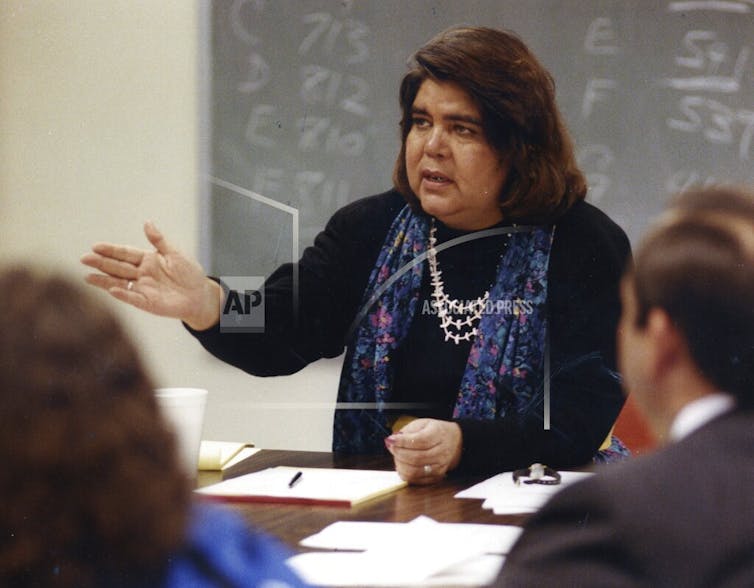
Mankiller’s duties as chief included attending the Arkansas Riverbed Authority meetings to discuss multiple Native communities’ access to water. Tom Gilbert/Tulsa World via AP Images

She came of age in San Francisco during the Red Power Movement, which was marked by Indigenous people’s activism across the country and aimed to draw attention to broken treaty promises, widespread dispossession and police brutality. She and her siblings supported the occupation of Alcatraz, a takeover by Native activists that lasted 18 months.

She married young, had children and willed herself through a college education. She divorced and returned home to Oklahoma in 1976 as a single parent with two daughters. Mankiller’s family history, like that of so many Native Americans in this country, cannot be told or understood without understanding changes in federal Indian policy, which often dictated where Native people lived and the economic opportunities available to them.

What she means to Cherokee people

Mankiller’s life was similar to those of many families who remained in Oklahoma on allotments or within Cherokee communities after Oklahoma became a state in 1907. Until the age of 11, she grew up in Adair County, which was about 46% Cherokee in the 2020 census.

When she returned to Oklahoma from California in the late 1970s to work for the Cherokee Nation, she prioritized and supported a community-driven project that brought running water to the Bell community. Bell, a rural community in Adair County, is still home to large pockets of Cherokee people. This effort was later dramatized in the 2013 film “The Cherokee Word for Water.” Mankiller’s commitment to improving the lives of Cherokee people was central to her work, even before she became chief.

Her rise to the position of principal chief in 1985 coincided with a moment when the efforts of civil rights activists, Black nationalists, Red Power and women’s rights activists of the previous decades were bearing fruit. She represented and modeled what people like Gloria Steinem, with whom Mankiller formed an enduring friendship, hoped to see more people achieve in the larger U.S.

A tall white man with thick gray hair places medal around neck of shorter woman with cropped brown hair
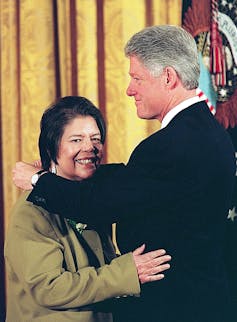
President Clinton awards Wilma Mankiller the Presidential Medal of Freedom. Paul J. Richards/AFP via Getty Images

Mankiller’s impact extended beyond Cherokee people. In a nod to her accomplishments, President Bill Clinton awarded her the Presidential Medal of Freedom in 1998. Mankiller understood that she represented how far women leaders had come and the hope we might still arrive where we need to be.

I still remember learning of her death from pancreatic cancer in April 2010 when I was a graduate student in history at the University of North Carolina at Chapel Hill, not far from Salem College where she first inspired me. I, like many others I imagine, wept for her, enormously proud of all she had achieved.

The Cherokee value of gadugi

Mankiller’s transition to chief wasn’t easy. People initially questioned a woman’s ability to lead the tribe. If there was any doubt of Mankiller’s capabilities as a leader when she took over as chief in 1985, in her second election to office six years later, she received almost 83% of the vote.

She gained support by exemplifying gadugi – a Cherokee word that means working together collectively for the benefit of the whole community. She drew upon her culture, history and tribal identity as a leader, and she raised her daughters Gina and Felicia Olaya to do the same. Though neither held office, both have worked for and supported the Cherokee Nation throughout their lives.

During her time as chief, Mankiller provided a foundation for the continued growth of the Cherokee Nation. Enrollment in Cherokee Nation doubled under her leadership. She championed education and secured a US$9 million vocational center. A 1991 Parade Magazine profile described her leadership style as quiet but strong.

At her mother’s memorial, Gina, who died in October 2022, said that her mother taught her family “how to laugh, how to dance, to appreciate Motown music, to be a humble servant to our people, to love one another unequivocally and to cherish each and every moment we spent together as a family.”

Mankiller articulated what generations of Cherokee people knew – that Indigenous people are capable of generating the solutions to the problems they face. As chief, she focused on issues that benefited some of the most vulnerable Cherokee people, such as rural development, housing, employment and education. Mankiller listened to community members to determine the way forward. I believe her legacy, now enshrined on a quarter, will continue to inspire new generations of people seeking to make a difference in the world.

Julie Reed, Associate Professor in History, Penn State

This article is republished from The Conversation under a Creative Commons license. Read the original article.

MATTLR.COM

3AM Questions that cut back

Sales Funnel Template

The Sales Funnel Explained

Mysterious Me

Just another WordPress.com site

Computer Vision Embedded

Harnessing the Power of Computer Vision in Embedded Technology

Optimal Happiness

Maximize Your Happiness, Well-Being, & Life Satisfaction

The Mind Connectory

Your Journey to Personal Growth Starts Here

Welcome to Huwspace

Here to share views and discuss the latest perspective's on the world going to hell in a handcart!

YourMindWithin.com

Change Your Life By Changing Your Mind

The Secret Truth About

The Secret Truth About Lifestyle Changes Is The Secret To Success

Fox Reviews Rock

Rock & Metal Reviews That Hit Hard

infoblogger.com

daily reaserch base article

God

I am God

Being Fit Start Now

The website Being Fit Start Now focuses on helping women, particularly those over 40, achieve their health and fitness goals from the comfort of their homes. It provides a variety of resources, including at-home workout programs, weight loss tips, and nutritional guidance. The site offers specific fitness routines, such as yoga workouts, full-body exercises, and specialized routines for reducing belly fat, all designed for different age groups, especially women over 40 and 50. Additionally, it features dietary advice, supplement recommendations, and healthy recipes aimed at supporting weight loss and overall wellness.

The Delightfully Resentful Sketchbook of Gladys Ruby

Failed Artist in Her Twilight Spreading Misery One Sketch at a Time.

Fairy who leaves the spirit world for the sake of love.❤️❤️❤️❤️

read the book of the love fairy,🌷🌷🌷💖💖💝

Mastering My Thoughts

My mind is running a marathon, so I write to relax and release.

Gospel road 66

Seeking truth in times of miss information

Life...Take 2!

I hope that someone sees this page and decides not to give up.

Bachir Bastien

Practical advice for a happier, fuller, and more meaningful life

marketingonthe.net/

Digital Marketing Directory, Tools & Info To Help You Grow Your Business

RazzWorks

Keep on Going - Keep On Growing

2 - Slava Ukraini

Supporting Ukrainian

praktikotips

Wellness tips for healthy & happy living

Andrea, illustrator

Illustrations to make you smile, laugh and sometimes, think 😉

Happy Hub

Health, Wellness and Happiness Hub and Blog.

delishbymich

Custom Cakes, Baking and Recipes

Herder of Swine

Investigation of Misery and Joy

Tiktalkies

Let us cherish, preserve and spread the gift of knowledge

The Secret Sandbox

What are the differences between men and women?

BluntPathway

Honest path to a peaceful life

I’m Working on It

A mom on a journey to enlightenment

Estoreknight.com

Best Products To Buy at affordable price

Jaye Marie and Anita Dawes

two fiction writers

Design a site like this with WordPress.com
Get started