I am just an average man who loves writing, thinking and trying to inspire kindness, love, understanding and Compassion in others and try to find them within myself.
In times like these, we either succumb to fear or rise up to the challenges ahead of us. Fear is something we all deal with, it is something we are supposed to have in dire and life-threatening situations. Sometimes we manufacture fear out of lack of control or lack of the knowledge to deal with a situation. Feeling fear is normal but one must learn to control it and move beyond it.
Right now I see a lot of fear in the world, I watch fear cause division within the world. Fear can transform into anger and hate as well. That is the reason why we all need to learn how to manage our fear. The problem is what may work for one person may not work for another, since fear can arise from different sources and situations. So I suggest seeking out help dealing with your fears if you are unable to cope with them yourself, try meditation to calm your mind and remind yourself it is okay to not always be in control of everything.
There is so much more to life than fear, we as a species need to focus more on solving the issues before us than the possible outcomes if nothing is done. The future is not set in stone and if we all work together towards a better tomorrow it will become a reality. If Life becomes overwhelming, you can meditate or go find a calm and peaceful place and relax there till you can clear your mind.
Focus your mind on what you can change and do to help bring positive change in your life and the world around you. I know the pandemic and lockdowns have put a big mental, emotional and financial stress on people and It has both brought out the best of people and the worst. It is time to heal ourselves mentally and emotionally so that we can move forward.
Find solace in the way that works for you and be kind to yourself and others
We are living in trying times, the world is on the brink of being at war, soaring energy and food prices along with politicization of almost every topic and the polarization of political views. With the war going on in Ukraine we watch the killing of civilians in the crossfire and the death of soldiers on both sides. Too many children suffered in this war and a sad percentage of the children died as a result of the conflict.
Both the East and West are playing a part in this tragic situation in Ukraine, They need to pause and look at the pain, suffering, and instability that’s being caused by the conflict, not only in Ukraine but across the globe. I ask the leaders of all the world nations, be it they are an active part or just a spectator of this conflict to think of the long-term damage that will come from this war. It will affect all of the countries of the world in the end economically and if we do not find a peaceful resolution to the situation it could cause a third world war. Being that there are too many nations in this world that poses nuclear weapons it could be the end of life as we know it.
So, I plead with all the leaders of the nations involved to seek out a diplomatic solution to this conflict, the cost of this conflict is too high for what may be gained. After all, we are brothers and sisters in this world, even if we sometimes think differently or allow political, religious, and national policies and agendas to separate us. Deep inside we all want the same thing I believe, a safe and happy world for the future generations to live in and the economic success of the nations we live in.
Being just a Citizen, I see all people from around the world as part of my extended family. I firmly believe the people of the world are in general good and caring in nature. I just hope and pray that goodness is in the leaders involved in this conflict and we can go from military conflict to diplomatic discussions before it is escalated to a full-blown world war.
I Also pray that China can get its outbreak of Covid-19 under control so no more people will suffer. China could take the lead in trying to get the diplomatic discussion going, being one of the superpowers in the modern world, it would be great to see them step up and play a peaceful part in this conflict. I also hope China can slow down the aggressiveness towards Taiwan and find some sort of diplomatic solution there as well. War may benefit some financially, but for the majority of the people involved it only brings suffering, death, and destruction.
The East and West need to stop Saber Rattling, Finger Pointing, and posturing. As my mom always told me, be a part of the solution not a part of the problem. I know it all isn’t as black and white as it seems, but we are capable as a species to find peaceful solutions to these issues. The world needs a change in direction away from this aggressive and divisive path towards a diplomatic and cooperative path if we as a species are to survive and thrive in the century to come.
I Pray for peace and prosperity for all of humanity, I hope there will be diplomatic solutions to all the problems we face geopolitically. I hope as well we come together as species to deal with all the problems we face as a whole. God bless and best wishes for all.
Recently I uploaded a Video that was Creative Commons Licenced and Done by the Blender Foundation, it was a short animation called Caminandes 3 LLamigos, It was removed and got a strike, Someone claimed it had music in it that was copyrighted, the music was from India from I could find and nothing in the video resembled what I found. The Animation short has been on youtube by many other YouTubers, even the Creator and Blender have it there.
The purpose of this post is to Complain about how Youtube does not Verify a Claim before putting a Strike against a user and then if you wish to Contest it, it all falls on you legally if there is a problem. Making it less likely for most YouTubers to contest due to the lack of desire to be sued over something be it legit or not.
My Suggestion is to Do not upload any content to youtube that you, yourself have not made yourself, and make sure to have permission from any music you use even if it’s creative commons. Since it seems anyone can claim a copyright infringement without verification that your video contains it. Been watching and using Youtube since it first came around decades ago, bad enough they advertise you to death on most videos, they don’t seem to support the content creators and suppliers as they should. Though I do understand the Legal issues they must face, they need to also take into consideration that some copyright claims are bogus and done in a trolling fashion as well.
From now on I will no longer upload videos to Youtube that I didn’t create if I upload any at all. Won’t stop me from viewing Youtube though. Just not happy with the situation, even though I can understand the legal issues running a Video sharing site.
Monkeypox isn’t a new disease. The first confirmed human case was in 1970, when the virus was isolated from a child suspected of having smallpox in the Democratic Republic of Congo (DRC). Monkeypox is unlikely to cause another pandemic, but with COVID-19 top of mind, fear of another major outbreak is understandable. Though rare and usually mild, monkeypox can still potentially cause severe illness. Health officials are concerned that more cases will arise with increased travel.
I’m a researcher who has worked in public health and medical laboratories for over three decades, especially in the realm of diseases with animal origins. What exactly is happening in the current outbreak, and what does history tell us about monkeypox?
A cousin of smallpox
Monkeypox is caused by the monkeypox virus, which belongs to a subset of the Poxviridae family of viruses called Orthopoxvirus. This subset includes the smallpox, vaccinia and cowpox viruses. While an animal reservoir for monkeypox virus is unknown, African rodents are suspected to play a part in transmission. The monkeypox virus has only been isolated twice from an animal in nature. Diagnostic testing for monkeypox is currently only available at Laboratory Response Network labs in the U.S. and globally.
The name “monkeypox” comes from the first documented cases of the illness in animals in 1958, when two outbreaks occurred in monkeys kept for research. However, the virus did not jump from monkeys to humans, nor are monkeys major carriers of the disease.
Monkeypox belongs to the Poxviridae family of viruses, which includes smallpox. CDC/ Cynthia S. Goldsmith
Epidemiology
Since the first reported human case, monkeypox has been found in several other central and western African countries, with the majority of infections in the DRC. Cases outside of Africa have been linked to international travel or imported animals, including in the U.S. and elsewhere.
Because monkeypox is closely related to smallpox, the smallpox vaccine can provide protection against infection from both viruses. Since smallpox was officially eradicated, however, routine smallpox vaccinations for the U.S. general population were stopped in 1972. Because of this, monkeypox has been appearing increasingly in unvaccinated people.
The virus can be transmitted through contact with an infected person or animal or contaminated surfaces. Typically, the virus enters the body through broken skin, inhalation or the mucous membranes in the eyes, nose or mouth. Researchers believe that human-to-human transmission is mostly through inhalation of large respiratory droplets rather than direct contact with bodily fluids or indirect contact through clothes. Human-to-human transmission rates for monkeypox have been limited.
Health officials are worried the virus may currently be spreading undetected through community transmission, possibly through a new mechanism or route. Where and how infections are occurring are still under investigation.
Signs and symptoms
After the virus enters the body, it starts to replicate and spread through the body via the bloodstream. Symptoms usually don’t appear until one to two weeks after infection.
Monkeypox produces smallpox-like skin lesions, but symptoms are usually milder than those of smallpox. Flu-like symptoms are common initially, ranging from fever and headache to shortness of breath. One to 10 days later, a rash can appear on the extremities, head or torso that eventually turns into blisters filled with pus. Overall, symptoms usually last for two to four weeks, while skin lesions usually scab over in 14 to 21 days.
While monkeypox is rare and usually non-fatal, one version of the disease kills around 10% of infected people. The form of the virus currently circulating is thought to be milder, with a fatality rate of less than 1%.
Evidence suggests that the smallpox vaccine can help prevent monkeypox infections and decrease the severity of the symptoms. One vaccine known as Imvamune or Imvanex is licensed in the U.S. to prevent monkeypox and smallpox.
Vaccination after exposure to the virus may also help decrease chances of severe illness. The CDC currently recommends smallpox vaccination only in people who have been or are likely to be exposed to monkeypox. Immunocompromised people are at high risk.
Twenty-five years ago, when I was a young anthropologist working in northern Siberia, the Indigenous hunters, fishers and trappers I lived with would often stop and solemnly offer something to the tundra. It was usually small, such as coins, buttons or unlit matches. But it was considered essential. Before departing on a hunting or fishing trip, I’d be asked if I had some change in my outer coat. If I didn’t, someone would get me some so it was handy. We left other gifts, too, such as fat from wild reindeer to be fed to the fire.
I was intrigued. Why do these things? Their answers were usually along the lines of, “We are the children of the tundra,” or “we make these sacrifices so that tundra will give us more animals to hunt next year.”
These practices are part of what I and other anthropologists call “traditional ecological knowledge.” Beliefs and traditions about the natural world are central in many Indigenous cultures around the world, bringing together what industrialized cultures think of as science, medicine, philosophy and religion.
Many academic studies have debated whether Indigenous economies and societies are more oriented than others toward conservation or ecology. Certainly the idealized stereotypes many people hold about Indigenous groups’ being “one with nature” are simplistic and potentially damaging to the groups themselves.
However, recent studies have underscored that conservationists can learn a lot from TEK about successful resource management. Some experts argue that traditional knowledge needs a role in global climate planning, because it fosters strategies that are “cost-effective, participatory and sustainable.”
Part of TEK’s success stems from how it fosters trust. This comes in many different forms: trust between community members, between people and nature, and between generations.
Defining TEK
Looking more closely at the components of TEK, the first, “tradition,” is something learned from ancestors. It’s handed down.
“Ecological” refers to relationships between living organisms and their environment. It comes from the ancient Greek word for “house,” or “dwelling.”
Finally, the earliest uses of the term “knowledge” in English refer to acknowledging or owning something, confessing something and sometimes recognizing a person’s position or title. These now-obsolete meanings emphasize relationships – an important aspect of knowledge that modern usage often overlooks but that is especially important in the context of tradition and ecology.
Combining these three definitions helps to generate a framework to understand Indigenous TEK: a strategy that encourages deference for ancestral ways of dwelling. It is not necessarily strict “laws” or “doctrine,” or simply observation of the environment.
TEK is a way of looking at the world that can help people connect the land they live on, their behavior and the behavior of the people they are connected to. Indigenous land practices are based on generations of careful and insightful observations about the environment and help define and promote “virtuous” behavior in it.
As an American suburbanite living in a remote community in Siberia, I was always learning about what was “proper” or “improper.” Numerous times people would tell me that what I or someone else had just done was a “sin” in respect to TEK. When someone’s aunt died one year, for example, community members said it happened because their nephew had killed too many wolves the previous winter.
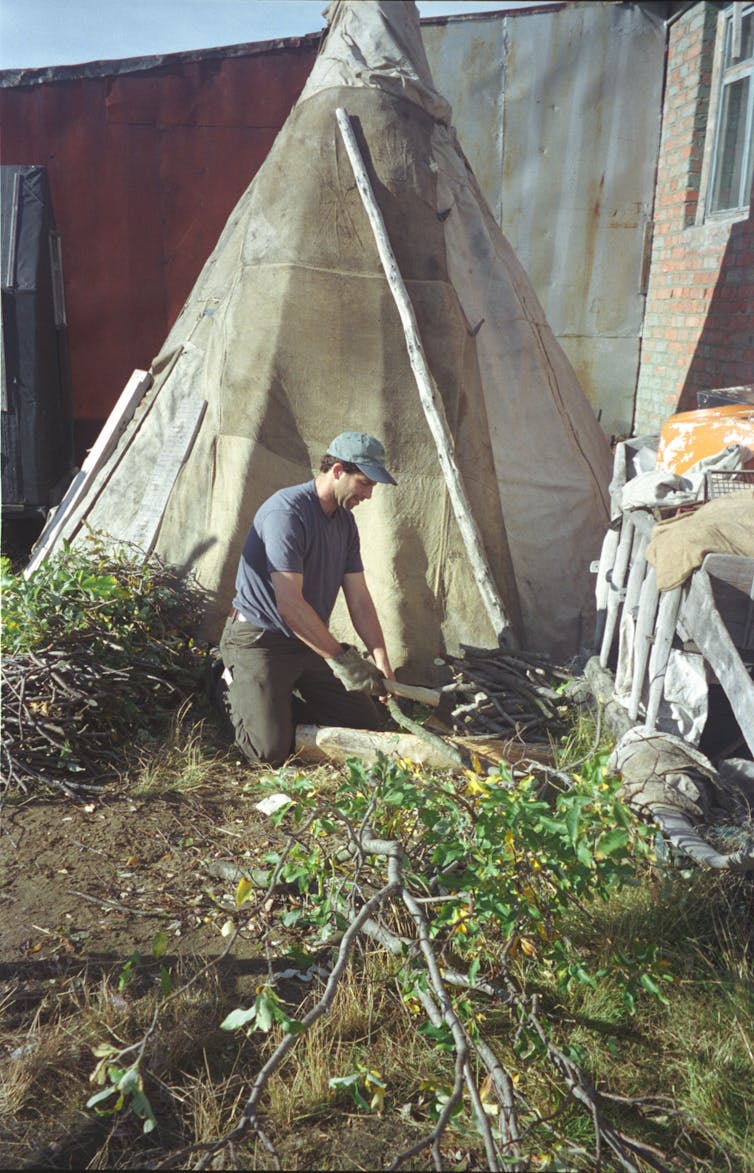
The author learning to cut up dwarf willow in the proper way for use in a summer chum, or tent, to smoke caribou meat. John Ziker, CC BY-NC-ND
Similarly, after stopping to assess the freshness of some reindeer tracks on the tundra, one hunter told me, “We let these local wild reindeer roam in midwinter so they will return next year and for future generations.” Here, TEK spells out the potential environmental impacts of greed – which, in this case, would mean overhunting.
Concepts like these are not isolated to Siberia. Much work has been done examining the parallels among ancestral systems of deference in Siberia, Amazonia, North America and other regions.
Trust and tradition
These examples illustrate how TEK is a set of systems that promote trust through encouraging deference for ancestral ways of dwelling in the world.
Moderation of self-interested behaviors requires such trust. And confidence that the environment will provide – caribou to hunt, say, or ptarmigan birds to trap – depends on the idea that people will treat the environment in a respectful manner.
Previously, I’ve studied prosociality – behavior that benefits others – in northern Siberian practices of food-sharing, child care and use of hunting lands.
These aspects of life depend on the idea that the “real” owners of the natural resources are ancestors and that they punish and reward the behaviors of the living. Such ideas are encouraged by elders and leaders, who commend virtuous and prosocial behavior while connecting negative outcomes with selfishness.
Trust is an essential component of reciprocity – exchange for mutual benefit – and prosociality. Without trust, it does not make sense to take risks in our dealings with other people. Without trust we cannot cooperate or behave in nonexploitative ways, such as protecting the environment. This is why it is advantageous for societies to monitor and punish noncooperators.
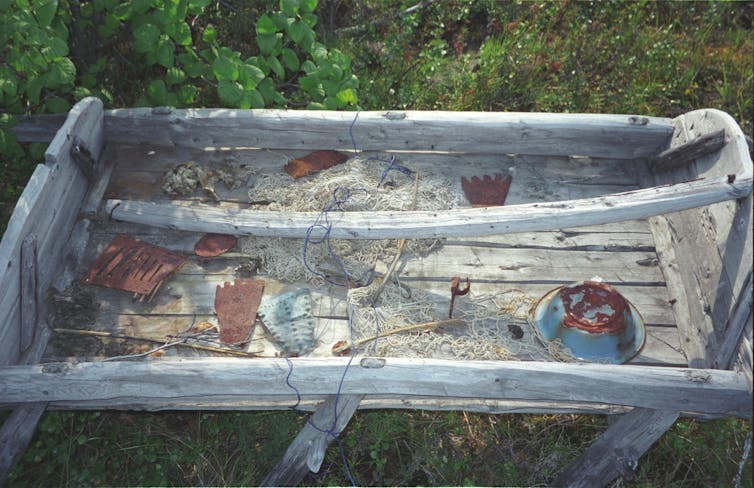
An abandoned reindeer sleigh, likely a grave, with several personal items. One is not allowed to disturb it, which would disrespect the dead, who are considered the true owners of the land. John Ziker, CC BY-NC-ND
It also stems from growing awareness of the need to protect Indigenous peoples’ rights and sovereignty. TEK cannot be “extracted.” Outsiders need to show deference to knowledge-holders and respectfully request their perspective.
One idea societies can adopt as they combat climate change is the importance of trust – which can feel hard to come by these days. Young activist Greta Thunberg’s “Fridays for Future” initiative, for example, highlights the ethical issues of trust and responsibility between generations.
Many outdoor enthusiasts and sustainability organizations emphasize “leaving no trace.” In fact, people always leave traces, no matter how small – a fact recognized in Siberian TEK. Even footsteps compact the soil and affect plant and animal life, no matter how careful we are.
A more TEK-like – and accurate – maxim might say, “Be accountable to your descendants for the traces you leave behind.”
Sunscreen bottles are frequently labeled as “reef-friendly” and “coral-safe.” These claims generally mean that the lotions replaced oxybenzone – a chemical that can harm corals – with something else. But are these other chemicals really safer for reefs than oxybenzone?
In our new study, published in Science, we found that when corals and sea anemones absorb oxybenzone, their cells turn it into phototoxins, molecules that are harmless in the dark but become toxic under sunlight.
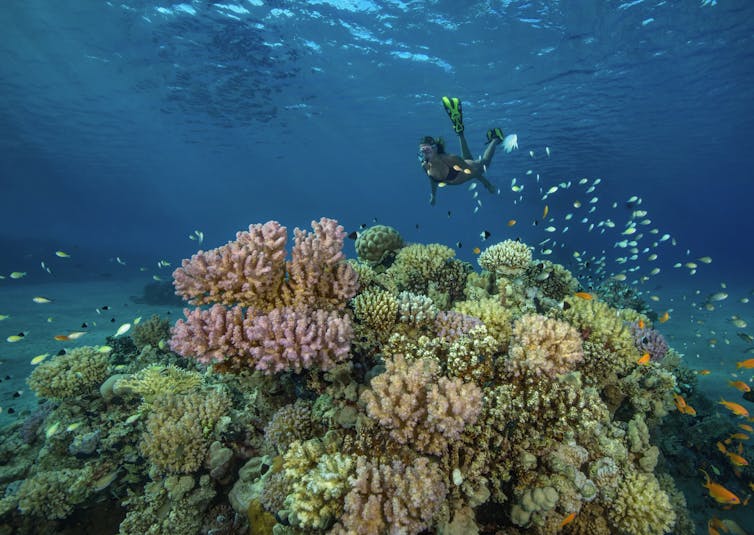
Reefs around the world – like the Great Barrier Reef seen here – are bleaching and dying because of stressors like increased water temperatures, and sunscreens may be exacerbating the issues. Amanda Tinoco, CC BY-ND
Protecting people, harming reefs
Sunlight is made of many different wavelengths of light. Longer wavelengths – like visible light – are typically harmless. But light at shorter wavelengths – like ultraviolet light – can pass through the surface of skin and damage DNA and cells. Sunscreens, including oxybenzone, work by absorbing most of the UV light and converting it into heat.
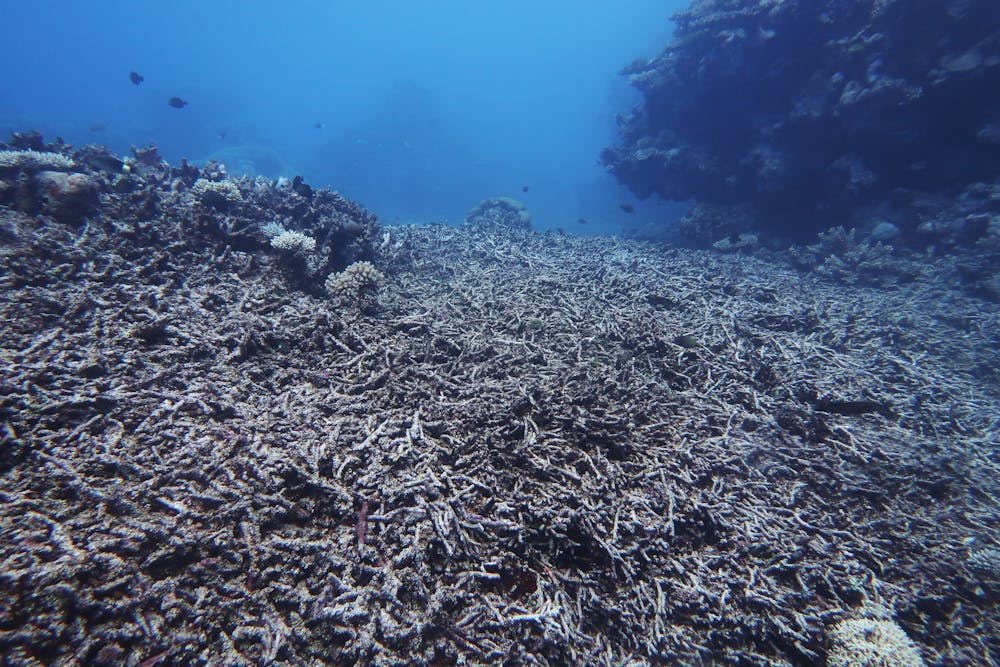
Coral reefs around the world have suffered in recent decades from warming oceans and other stressors. Some scientists thought that sunscreens coming off of swimmers or from wastewater discharges could also be harming corals. They conducted lab experiments that showed that oxybenzone concentrations as low as 0.14 mg per liter of seawater can kill 50% of coral larvae in less than 24 hours. While most field samples typically have lower sunscreen concentrations, one popular snorkeling reef in the U.S. Virgin Islands had up to 1.4 mg oxybenzone per liter of seawater – more than 10 times the lethal dose for coral larvae.
Likely inspired by this research and a number of other studiesshowing damage to marine life, Hawaii’s legislators voted in 2018 to ban oxybenzone and another ingredient in sunscreens. Soon after, lawmakers in other places with coral reefs, like the Virgin Islands, Palau and Aruba, implemented their own bans.
There is still an open debate whether the concentrations of oxybenzone in the environment are high enough to damage reefs. But everyone agrees that these chemicals can cause harm under certain conditions, so understanding their mechanism is important.
By putting sea anemones into test tubes with oxybenzone and controlling what kinds of light they were exposed to, we could see whether the sunscreen was reacting to light. Djordje Vuckovic, CC BY-ND
Sunscreen or toxin
While laboratory evidence had shown that sunscreen can harm corals, very little research had been done to understand how. Some studies suggested that oxybenzone mimics hormones, disrupting reproduction and development. But another theory that our team found particularly intriguing was the possibility that the sunscreen behaved as a light-activated toxin in corals.
To test this, we used the sea anemones our colleagues breed as a model for corals. Sea anemones and corals are closely related and share a lot of biological processes, including a symbiotic relationship with algae that live within them. It is extremely difficult to perform experiments with corals under lab conditions, so anemones are typically much better for lab-based studies like ours.
We put 21 anemones in test tubes full of seawater under a lightbulb that emits the full spectrum of sunlight. We covered five of the anemones with a box made of acrylic that blocks the exact wavelengths of UV light that oxybenzone normally absorbs and interacts with. Then we exposed all the anemones to 2 mg of oxybenzone per liter of seawater.
The anemones under the acrylic box were our “dark” samples and the ones outside of it our control “light” samples. Anemones, like corals, have a translucent surface, so if oxybenzone were acting as a phototoxin, the UV rays hitting the light group would trigger a chemical reaction and kill the animals – while the dark group would survive.
We ran the experiment for 21 days. On Day Six, the first anemone in the light group died. By Day 17, all of them had died. By comparison, none of the five anemones in the dark group died during the entire three weeks.
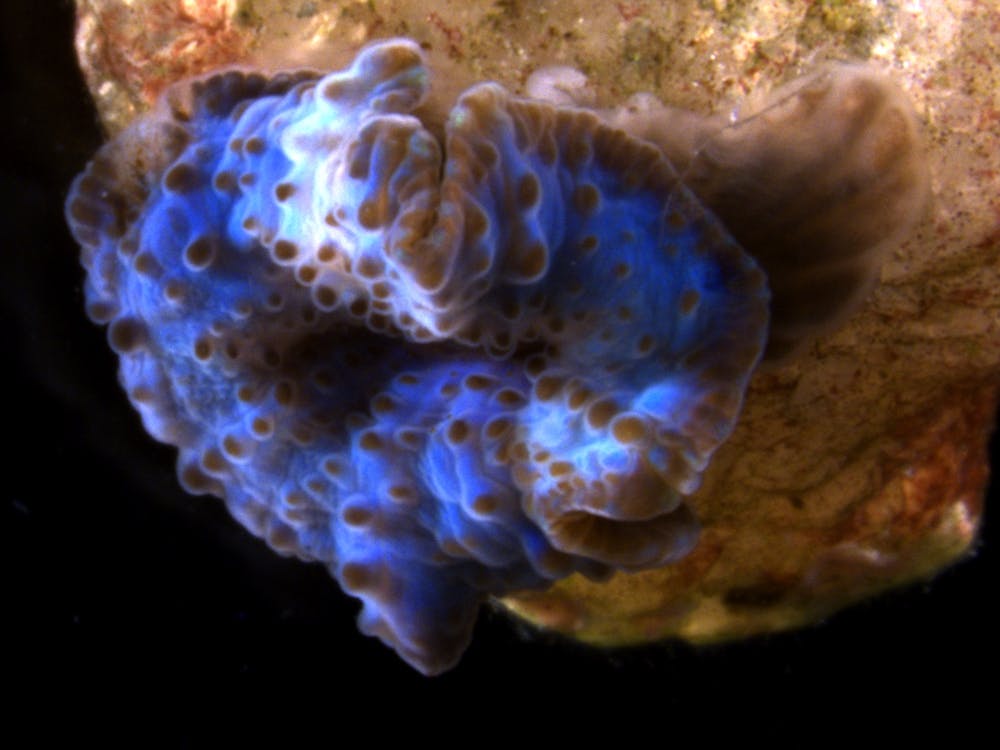
Corals – like the mushroom coral seen here – and sea anemones absorb oxybenzone and metabolize it, but in doing so, they turn it into a toxin. Christian Renicke, CC BY-ND
Metabolism converts oxybenzone to phototoxins
We were surprised that a sunscreen was behaving as a phototoxin inside the anemones. We ran a chemical experiment on oxybenzone and confirmed that, on its own, it behaves as a sunscreen and not as a phototoxin. It’s only when the chemical was absorbed by anemones that it became dangerous under light.
Any time an organism absorbs a foreign substance, its cells try to get rid of the substance using various metabolic processes. Our experiments suggested that one of these processes was turning oxybenzone into a phototoxin.
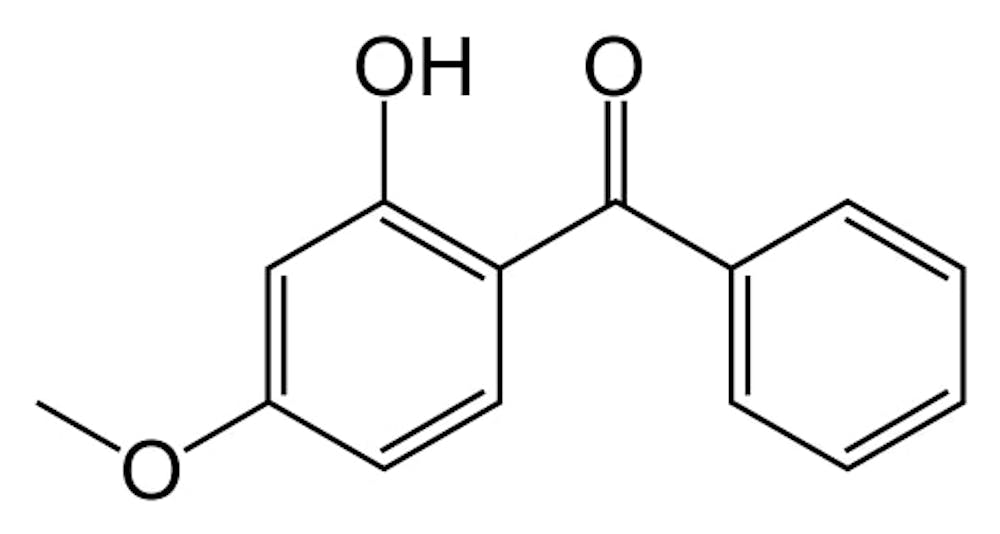
To test this, we analyzed the chemicals that formed inside anemones after we exposed them to oxybenzone. We learned that our anemones had replaced part of oxybenzone’s chemical structure – a specific hydrogen atom on an alcohol group – with a sugar. Replacing hydrogen atoms on alcohol groups with sugars is something that plants and animals commonly do to make chemicals less toxic and more water soluble so they are easier to excrete.
When cells try to process oxybenzone, they replace part of an alcohol group (highlighted in red on the left) with a sugar (in red on the right) and in doing so turn the sunscreen into a phototoxin. Djordje Vuckovic, CC BY-ND
But when you remove this alcohol group from oxybenzone, oxybenzone ceases to function as a sunscreen. Instead, it holds on to the energy it absorbs from UV light and kicks off a series of rapid chemical reactions that damage cells. Rather than turning the sunscreen into a harmless, easy-to-excrete molecule, the anemones convert oxybenzone into a potent, sunlight-activated toxin.
When we ran similar experiments with mushroom corals, we found something surprising. Even though corals are much more vulnerable to stressors than sea anemones, they did not die from oxybenzone and light exposure during our entire eight-day experiment. The coral made the same phototoxins from oxybenzone, but all of the toxins were stored in the symbiotic algae living in the coral. The algae seemed to absorb the phototoxic byproducts and, in doing so, likely protected their coral hosts.
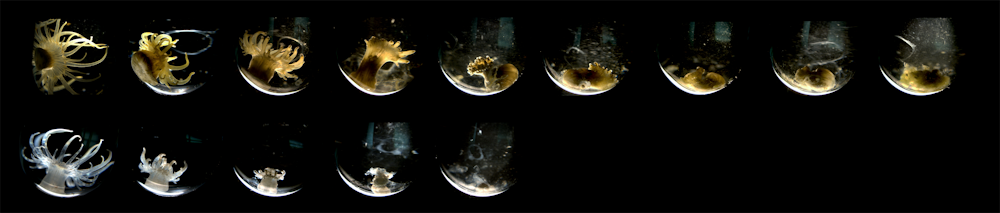
This photo series shows how darker-colored anemones on top with algae in them lived longer than the lighter-colored anemones on the bottom that did not have algae living in them. Djordje Vuckovic and Christian Renicke, CC BY-ND
We suspect that the corals would have died from the phototoxins if they did not have their algae. It is not possible to keep corals without algae alive in the lab, so we did some experiments on anemones without algae instead. These anemones died about two times faster and had almost three times as many phototoxins in their cells compared than the same anemones with algae.
Coral bleaching, ‘reef-safe’ sunscreens and human safety
We believe there are a few important takeaways from our effort to better understand how oxybenzone harms corals.
First, coral bleaching events – in which the corals expel their algal symbionts because of high seawater temperatures or other stressors – likely leave corals particularly vulnerable to the toxic effects of sunscreens.
Second, it’s possible that oxybenzone could also be dangerous to other species. In our study, we found that human cells can also turn oxybenzone into a potential phototoxin. If this happens inside the body, where no light can reach, it’s not an issue. But if this occurs in the skin, where light can create toxins, it could be a problem. Previous studies have suggested that oxybenzone could pose health risks to people, and some researchers have recently called for more research into its safety.
Finally, the chemicals used in many alternative “reef-safe” sunscreens contain the same alcohol group as oxybenzone – so could potentially also be converted to phototoxins.
We hope that, taken together, our results will lead to safer sunscreens and help inform efforts to protect reefs.
People wonder why there is so much low self-esteem in the world, if you take a good look at television shows, commercials, social media, movies, and even the news on cable news stations you just may see some of the reasons for low self-esteem, but then there is also how one’s family treats them, their peers and the educational system.
When you are constantly bombarded with images of thin, fit, and muscular actors, advertisements aimed to push miracle vitamins and supplements to fix all your shortcomings, it is very hard to hold on to a good self-image and even harder to build it up. Constantly being told that having a perfect body weight, toned muscles, the right clothes, and accessories makes one beautiful and successful is making it hard for most people to maintain healthy self-esteem.
Unfortunately, fashion, the newest electronics, and possessions play a big part in teenage self-image, which makes it hard for those who don’t have the money to compete with their peers. Combining that with parents that have to work 2 jobs or inconvenient hours to maintain the quality of life they have only makes it harder on teenagers and kids.
The ones that seem to suffer the worst during school years are those that don’t quite fit the norm, the overweight, the below-average to average looking, and the sensitive passive individuals. Bullying from those who think they are cool, tougher, and better than others does not help the situation at all. The consequences of bullying are usually mild and it seems it’s hard to catch kids bullying or maybe some just overlook it.
Parents and siblings also play a large part in the development of a child’s self-esteem, they can be either a positive or negative force when it comes to a child’s self-image. Siblings usually are competing for the parent’s attention, love and favor so they tend to be very mean to one another. Parents on the other hand usually are trying to do what’s best for the child but don’t realize what works for one child does not always work for the other. Each child is a unique individual, they have different needs and need help in different ways. Some parents, unfortunately, don’t know how to deal with their children at all so they try to treat them as if they are adults way before the child or teen is emotionally and mentally ready to do so. This usually results in conflict and the child/teen becomes rebellious and has a poor self-image.
If the low self-esteem is not addressed and corrected during the child/teen years then it is carried into the adult years. That makes it very hard for the Adult to achieve a healthy relationship with a significant other and even harder for them to become successful in the work world.
Raising kids is not an easy task, being a parent means you have to be a caregiver, advisor, instructor, friend, leader, cook, counselor, and of course an ATM for the children lol. Helping a child navigate the battlefields of youth and preparing them for the many challenges they will have to face in the future is not an easy thing to accomplish. All you can do is give it your best shot and always be there for them when they need you.
I myself have had self-esteem issues throughout my life, I have been battling low self-esteem for many decades. I could go down a list of all the things that caused my low self-esteem but what is the use of that now that it now falls squarely on me to repair the damage and improve myself. Plus the first step in moving on and building up your self-esteem/self-image is to forgive those who helped in destroying it and letting go of your own contributions to the whole mess as well.
Just know this, there is no one better than you, but then there is no one lesser than you. We all are unique, we all have our own gifts to embrace and shortcomings that we need to deal with. There is no one on this planet that does not have some emotional or psychological baggage to deal with. How much money you have, and how many toys you have has nothing to do with who you are or how good you are. What defines you is how you live life, and how you treat others and yourself.
Being successful sure feels good, being financially well off does make life easier in many ways, but money, possessions, and success are fleeting, they can be gone in an instant. Family and friends to me are far more important along with how I treat others, and how I live my life. Those things will be with me throughout my life.
Well, I wish you happiness, remember it does not matter what others think or say about you, it is what you know about yourself that matters the most.
Mindfulness is seemingly everywhere these days. A Google search I conducted in January 2022 for the term “mindfulness” resulted in almost 3 billion hits. The practice is now routinely offered in workplaces, schools, psychologists’ offices and hospitals all across the country.
Most of the public enthusiasm for mindfulness stems from the reputation it has for reducing stress. But scholars and researchers who work on mindfulness, and the Buddhist tradition itself, paint a more complex picture than does the popular media.
Medicalizing meditation
Mindfulness originated in the Buddhist practice of “anapana-sati,” a Sanskrit phrase that means “awareness of breath.” Buddhist historian Erik Braun has traced the origins of the contemporary popularity of meditation to colonial Burma – modern-day Myanmar – in the late 19th and early 20th centuries. Meditation, which was practiced almost exclusively inside monasteries until then, was introduced to the general public in a simplified format that was easier to learn.
The gradual spread of meditation from that time to the present is a surprisingly complex story.
The process of translating the Buddhist practice of meditation across cultural divides transformed the practice in significant ways. Modern meditation often has different goals and priorities than traditional Buddhist meditation. It tends to focus on stress reduction, mental health or concrete benefits in daily life instead of spiritual development, liberation or enlightenment.
A pivotal moment in this transformation was the creation of the Mindfulness-Based Stress Reduction (MBSR) protocol by Jon Kabat-Zinn, a professor of medicine at the University of Massachusetts Medical School, in 1979. The stress reduction program introduced a standardized way of teaching meditation to patients so that its health benefits could be more rigorously measured by scientists.
Research on this new kind of “medicalized” mindfulness began to gather steam in the past two decades. As of today there are over 21,000 research articles on mindfulness in the National Library of Medicine’s online database — two and a half times as many articles as have been published on yoga, tai chi and reiki combined.
Scientific evidence vs. mindfulness hype
Medical researchers themselves have had a far more measured opinion about the benefits of meditation than the popular press.
For example, a 2019 meta-analysis, which is a review of many individual scientific studies, pointed out that the evidence for the benefits of mindfulness and other meditation-based interventions has “significant limitations” and that the research has “methodological shortcomings.”
Based on their review of the scientific literature, the authors warned against falling prey to “mindfulness hype.” On the positive side, they found various forms of meditation to be more or less comparable to the conventional therapies currently used to treat depression, anxiety, chronic pain and substance use. On the other hand, they concluded that more evidence is needed before any strong claims can be made regarding treatment of conditions such as attention disorders, PTSD, dysregulated eating or serious mental illnesses.
More troubling, some researchers are even beginning to suggest that a certain percentage of patients may experience negative side effects from the practice of meditation, including increased anxiety, depression or, in extreme cases, even psychosis. While the causes of these side effects are not yet fully understood, it is evident that for some patients, therapeutic meditation is far from the panacea it is often made out to be.
Putting mindfulness back into context
As a historian of the relationship between Buddhism and medicine, I argue that mindfulness can be a beneficial practice for many people, but that we should understand the broader context in which it developed and has been practiced for centuries. Mindfulness is one small part of a diverse range of healing techniques and perspectives the Buddhist tradition has developed and maintained over many centuries.
In a recent book, I have traced the global history of the many ways that the religion has contributed to the development of medicine over the past 2,400 years or so. Buddhist tradition advocates countless contemplations, devotional practices, herbal remedies, dietary advice and ways of synchronizing the human body with the environment and the seasons, all of which are related to healing.
These ideas and practices are enormously influential around the world as well as in Buddhist communities in the U.S. Such interventions have been particularly visible during the COVID-19 pandemic – for example, through the medical charity of major international Buddhist organizations as well as through health advice given by high-profile monastics such as the Dalai Lama.
Buddhism has always had a lot to say about health. But perhaps the most significant of its many contributions is its teaching that our physical and mental well-being are intricately intertwined – not only with each other, but also with the health and vitality of all living beings.
Medicalized meditation is now a self-help commodity that generates over US$1 billion per year, leading some critics to label it “McMindfulness.” But placing mindfulness back into a Buddhist ethical context shows that it is not enough to simply meditate to reduce our own stress or to more effectively navigate the challenges of the modern world.
As I argue in my most recent book, Buddhist ethics asks us to look up from our meditation cushions and to look out beyond our individual selves. It asks us to appreciate how everything is interconnected and how our actions and choices influence our lives, our society and the environment. The emphasis, even while healing ourselves, is always on becoming agents of compassion, healing and well-being for the whole.
[This Week in Religion, a global roundup each Thursday.Sign up.]
Scientists regularly study the ongoing degradation of Earth’s environment and track the changes wrought by a warming planet. Economists warn that intensifying disasters are harming people’s quality of life. And policymakers focus on crafting rules to diminish the health and environmental effects of humanity’s growing footprint.
What is the role of philosophers and people of faith in this bigger discussion around the environment and sustainability? Rita D. Sherma is co-chair of a research initiative aimed at bringing the beliefs of religion, spirituality, and ethics to the study of sustainability. Here she explains the core ideas behind “green spirituality,” how religion and environmental protection are closely intertwined and the role faith can play in restoring hope amid the drumbeat of discouraging environmental news.
What is green spirituality?
Green spirituality is an orientation to the divine, or supreme reality, that is grounded in our experience of life on planet Earth. It respects the miracle of life on this planet and recognizes our relationship with it. Such a spirituality can have God or the divine as the focus, or it can be oriented toward the Earth and its ecosystems for those outside of organized religion. It encourages a contemplative and harmonious relationship with the Earth.
Green spirituality seeks to harness the spiritual traditions of the world to energize the effort to restore planetary ecosystems and stop future harm. https://www.youtube.com/embed/d42L4hVJmrA?wmode=transparent&start=0 The rights of nature movement wants to give sacred rivers the same legal protections as people.
Why do spiritual and religious teachings belong as part of the global conversation on the environment?
First, 80% of the world’s population practices an established religion or a spiritual tradition that offers community, support, and resources for resilience.
Second, as I have written in my new book on religion and sustainability, better technology will help human communities restore ecosystems. More and better data, such as computations to forecast disasters, will also be helpful. But both are inadequate in the face of human denial and recalcitrance.
In my book, I write: “Planetary survival is now predicated upon the alignment of our notions of both human and ecological rights with our highest principles. As such, ways of knowing that are embedded in religion, philosophy, spiritual ethics, moral traditions, and a culture that values the community and the commons – as an essential resource for the transformation necessary for environmental regeneration and renewal – are indispensable.” In other words, people on Earth need to tap into the ways of thinking from these faith traditions to address the environmental crises we face now.
Can faith and religion help counter rising eco-anxiety?
Catastrophic wildfires across the planet, extreme weather patterns that destroy homes and histories, degraded soil, toxic air, unsafe water, and the desecrated beauty of places we have loved are causing climate trauma and eco-anxiety. For those who are acutely aware of the cliff edge on which we stand as a species and as a planetary community, the despair evoked by the magnitude of the disaster is almost unbearable.
Religions, faiths, and spiritual practices can help in unique ways. In this space, people can find community, peaceful practices of meditation, prayer, embodied sacred actions that include rituals and liturgies, and a ‘long view’ informed by the tragedies and triumphs faced by spiritual ancestors. Faith can provide hope and resilience in the midst of crises.
How do different faith traditions treat respect for nature?
Religions may disagree on many things, but each contains philosophical or theological orientations that can be interpreted and applied in ways that protect the Earth.
Some traditions such as Hindu, Yogic, Indigenous and others see the self as a microcosm of macrocosm, or a part of the greater whole. And, a profound sacred immanence, or integral divine presence, is woven through their philosophies. For these spiritual traditions, religious practice integrates trees, flowers, sacred groves, sanctified terrains, rivers, mountains and elements of the entire ecosphere into liturgical and personal practice.
Christian ecotheology focuses on stewardship and the ethics of Earth justice. A well-known Muslim ecotheologian speaks of the Earth as a mosque in reference to a saying (hadith) of the prophet – which renders the entire Earth as sacrosanct. Jewish ecological thinkers have envisaged the idea of “Shomrei Adamah” (Keepers of the Earth), which connects humanity and the Earth through divine love.
How are organized religions putting environmental protection into practice?
Many initiatives and conversations are happening among religions, and among interreligious leadership and international bodies – most importantly, the United Nations initiatives.
Some important conversations include the Interfaith Rainforest Initiative, which brings the dedication, impact, and moral authority of different faiths to restore the world’s rainforests and help empower the Indigenous peoples who view themselves as their protectors. Greenfaith is a global, multireligious climate and environmental movement. I also serve on the advisory board of the Yale Forum on Religion and Ecology, a pioneering international interreligious project at Yale University started by scholars Mary Evelyn Tucker and John Grim that ignited the academic field of religion and ecology as a global engaged force for the greening of religion.
How are environmental advocacy groups drawing in religion?
In 1985, the World Wildlife Fund established the U.K.-based Alliance of Religion and Conservation for developing partnerships with religious groups for collaborating on environmental protection. WWF’s Sacred Earth: Faiths for Conservation program collaborates with faith groups and religious communities who are committed to the view that the Earth is a sacred charge that demands the commitment of our care.
In November 2017, the U.N. “Environment Programme,” realizing the significance of religious communities as key actors, founded the Faith for Earth Initiative to engage with faith-based organizations as partners, at all levels, toward achieving the sustainable development goals and realizing the 2030 agenda. The initiative affirms that “Spiritual values drive individual behaviors for more than 80 percent of people.”
In fall 2020, the Parliament of the World’s Religions and the U.N. Environment Programme jointly published a book titled “Faith for Earth – A Call for Action,” which provides an overview of the diversity of religious principles and practices that support action for the protection of the Earth.
That’s not all. Research shows our pets can also strengthen our relationships and trust with other people. In addition, pets contribute positively to trust in our broader social communities.
Companion animals as social facilitators
As many of us know, animals provide an avenue for approaching another person socially, serving as a conversational starting point for connection. Pet ownership alone could be a source of shared interest and knowledge, even among people who may not have similar interests otherwise.
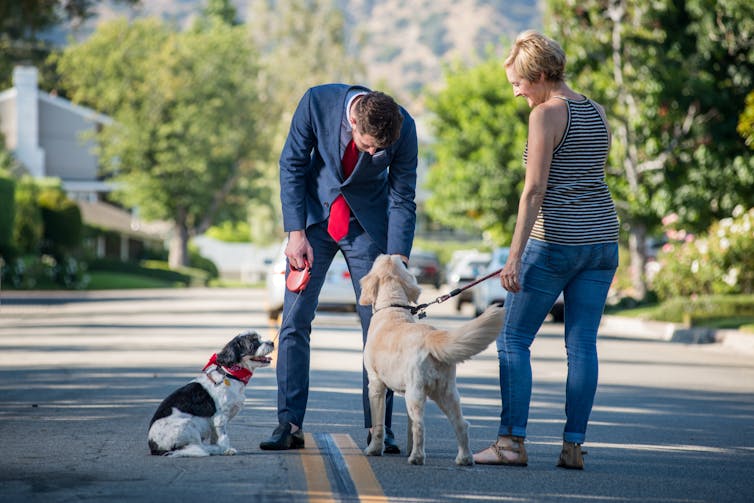
Simply walking down the street with a dog can lead to significantly more social interactions than walking without a dog. Assistance dogs can also facilitate these interactions. One study found that individuals using a wheelchair were more likely to be approached when their assistance animal was present.
The presence of an animal can also enhance perceptions of trustworthiness and responsibility, which in turn fosters positive social interactions. Researchers found that people were more likely to help a stranger with a dog than one without a dog, suggesting that the presence of an animal conferred perceptions of trust.
Pets have also been shown to foster social capital in communities. Social capital is a concept that encompasses the broader community and neighborhood networks of social relationships, and the degree to which the community has a culture of helping others. The trust inherent in these connections can lead to better health and well-being.
In addition to social facilitation, pets can contribute to social capital by strengthening social trust within communities. Neighbors may rely on one another to assist with animal care, which builds reciprocal trust. Pet owners’ use of shared spaces, such as dog parks or green spaces, can lead to better social relationships.
While evidence continues to support the idea that pets foster positive interactions between people, animals are not a universal solution for creating trust. There is still a lot we need to learn about the interrelated relationships between pets and people.
The website Being Fit Start Now focuses on helping women, particularly those over 40, achieve their health and fitness goals from the comfort of their homes. It provides a variety of resources, including at-home workout programs, weight loss tips, and nutritional guidance. The site offers specific fitness routines, such as yoga workouts, full-body exercises, and specialized routines for reducing belly fat, all designed for different age groups, especially women over 40 and 50. Additionally, it features dietary advice, supplement recommendations, and healthy recipes aimed at supporting weight loss and overall wellness.


















 Dovestar

You must be logged in to post a comment.