Random thoughts-Toxic people, self-worth, and forgiveness

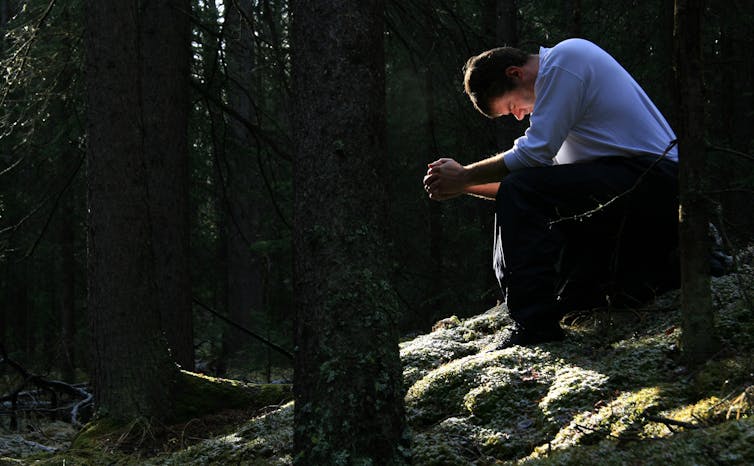
person sitting outdoors
Photo by Engin Akyurt on Pexels.com

Basing your self-worth on other people’s opinions of you and building your self-image on such only leads to a rollercoaster of emotions usually ending you up in depression or in a state of low self esteem. It is human nature to follow such patterns since we enter this world seeking the approval and acceptance of our parents and siblings. Which is fine in the earliest years of our life, but we are supposed to let go of such patterns as we age into young adults.

Unfortunately, many of us either let go of such behavior much later or continue on with it throughout our lives. Sure we can not avoid the opinions of others nor can we let go of that desire to belong and be accepted, but we can learn to navigate with the knowledge that what we think about ourselves is more important. Knowing that our psyche tends to seek approval from others and responds to the opinions of others, we should avoid toxic friends and try to navigate around toxic relatives as much as possible.

There will always be those in your life that do not like you and those that try the hardest to bring you down. Those are people we should try and avoid and ignore their negative comments and actions as much as we can. We should seek out those people that support us, enrich our lives, allong with those who may criticise us in a constructive way. We need some people in our lives that care enough to point out when were going astray just as much as we need those that emphasize with us and/or act as cheerleaders for us.

Toxic friends tend to break you down emotionally and mentally, some of them may not even know they are doing such because they never had positive reinforcement in their lives or a caring family possibly. Do not hate toxic people, just feel sorry for them. They are missing out on the love and happiness they could have in life and embrace the negativity in their lives for the short-lived rush they may feel or the temporary relief from the emptiness they feel.

Being a person that has both been toxic on occasion and the victim of toxic friends I can relate to both sides. On many occasions, I have tried to help some fo those toxic people in my life and rarely did I succeed in helping them because they didn’t want to change their way of thinking or being. This probably was due to my lack of abilities more than anything, so if you want to attempt to help someone who is toxic, I would suggest getting help for them if not seek out help for you to achieve such.

Life is hard enough at times, subjecting yourself to the negativity of toxic people makes it an even harder life to live. I guess there may be some strong enough to deal with toxic friends without suffering the ill effects of being around them all the time.Those people are probably rare and possibly the saving grace for the toxic people in their lives.

Just remember no matter what others may say or think, or even what you may beleive about yourself at times, you are unique and just as important as any other living creature on this planet. There is only one you in this universe and you were born for a reason. Just becuase you can not figure out what that reason is does not mean you do not have purpose in life nor does it mean you are less than anyone else.

If you stop worrying what others might think about you and focus more on how you could impact those around you in a positive and contructive way, you may find that you are quite a good person if you give yourself the chance. Forgive yourself of your past mistakes, and go forward with compassion and understanding. Forgive others as well, since holding onto grudges only does more harm to you than the one you hold the grudge againts. If too much energy is spent on regret and vengence the less energy is left to love others and for you to enjoy the gifts in life that you have.


There is much more to mindfulness than the popular media hype

Have the benefits of meditation been overhyped in the West? FatCamera/E+ via Getty Images

Pierce Salguero, Penn State

Mindfulness is seemingly everywhere these days. A Google search I conducted in January 2022 for the term โ€œmindfulnessโ€ resulted in almost 3 billion hits. The practice is now routinely offered in workplaces, schools, psychologistsโ€™ offices and hospitals all across the country.

Most of the public enthusiasm for mindfulness stems from the reputation it has for reducing stress. But scholars and researchers who work on mindfulness, and the Buddhist tradition itself, paint a more complex picture than does the popular media.

Medicalizing meditation

Mindfulness originated in the Buddhist practice of โ€œanapana-sati,โ€ a Sanskrit phrase that means โ€œawareness of breath.โ€ Buddhist historian Erik Braun has traced the origins of the contemporary popularity of meditation to colonial Burma โ€“ modern-day Myanmar โ€“ in the late 19th and early 20th centuries. Meditation, which was practiced almost exclusively inside monasteries until then, was introduced to the general public in a simplified format that was easier to learn.

The gradual spread of meditation from that time to the present is a surprisingly complex story.

In the U.S., meditation first started to be practiced among diverse communities of spiritual seekers as early as the 19th century. It was adopted by professional psychotherapists in the early 20th century. By the 21st century, it had become a mass-marketing phenomenon promoted by celebrities such as Oprah Winfrey, Deepak Chopra and Gwyneth Paltrow.

The process of translating the Buddhist practice of meditation across cultural divides transformed the practice in significant ways. Modern meditation often has different goals and priorities than traditional Buddhist meditation. It tends to focus on stress reduction, mental health or concrete benefits in daily life instead of spiritual development, liberation or enlightenment.

A pivotal moment in this transformation was the creation of the Mindfulness-Based Stress Reduction (MBSR) protocol by Jon Kabat-Zinn, a professor of medicine at the University of Massachusetts Medical School, in 1979. The stress reduction program introduced a standardized way of teaching meditation to patients so that its health benefits could be more rigorously measured by scientists.

Research on this new kind of โ€œmedicalizedโ€ mindfulness began to gather steam in the past two decades. As of today there are over 21,000 research articles on mindfulness in the National Library of Medicineโ€™s online database โ€” two and a half times as many articles as have been published on yoga, tai chi and reiki combined.

Scientific evidence vs. mindfulness hype

Medical researchers themselves have had a far more measured opinion about the benefits of meditation than the popular press.

For example, a 2019 meta-analysis, which is a review of many individual scientific studies, pointed out that the evidence for the benefits of mindfulness and other meditation-based interventions has โ€œsignificant limitationsโ€ and that the research has โ€œmethodological shortcomings.โ€

Based on their review of the scientific literature, the authors warned against falling prey to โ€œmindfulness hype.โ€ On the positive side, they found various forms of meditation to be more or less comparable to the conventional therapies currently used to treat depression, anxiety, chronic pain and substance use. On the other hand, they concluded that more evidence is needed before any strong claims can be made regarding treatment of conditions such as attention disorders, PTSD, dysregulated eating or serious mental illnesses.

More troubling, some researchers are even beginning to suggest that a certain percentage of patients may experience negative side effects from the practice of meditation, including increased anxiety, depression or, in extreme cases, even psychosis. While the causes of these side effects are not yet fully understood, it is evident that for some patients, therapeutic meditation is far from the panacea it is often made out to be.

Putting mindfulness back into context

As a historian of the relationship between Buddhism and medicine, I argue that mindfulness can be a beneficial practice for many people, but that we should understand the broader context in which it developed and has been practiced for centuries. Mindfulness is one small part of a diverse range of healing techniques and perspectives the Buddhist tradition has developed and maintained over many centuries.

Buddhist monks in orange robes praying
Mindfulness is one small part of the healing techniques forwarded by Buddhism. FredFroese/iStock / Getty Images Plus

In a recent book, I have traced the global history of the many ways that the religion has contributed to the development of medicine over the past 2,400 years or so. Buddhist tradition advocates countless contemplations, devotional practices, herbal remedies, dietary advice and ways of synchronizing the human body with the environment and the seasons, all of which are related to healing.

These ideas and practices are enormously influential around the world as well as in Buddhist communities in the U.S. Such interventions have been particularly visible during the COVID-19 pandemic โ€“ for example, through the medical charity of major international Buddhist organizations as well as through health advice given by high-profile monastics such as the Dalai Lama.

Buddhism has always had a lot to say about health. But perhaps the most significant of its many contributions is its teaching that our physical and mental well-being are intricately intertwined โ€“ not only with each other, but also with the health and vitality of all living beings.

Medicalized meditation is now a self-help commodity that generates over US$1 billion per year, leading some critics to label it โ€œMcMindfulness.โ€ But placing mindfulness back into a Buddhist ethical context shows that it is not enough to simply meditate to reduce our own stress or to more effectively navigate the challenges of the modern world.

As I argue in my most recent book, Buddhist ethics asks us to look up from our meditation cushions and to look out beyond our individual selves. It asks us to appreciate how everything is interconnected and how our actions and choices influence our lives, our society and the environment. The emphasis, even while healing ourselves, is always on becoming agents of compassion, healing and well-being for the whole.

[This Week in Religion, a global roundup each Thursday. Sign up.]

Pierce Salguero, Associate Professor of Asian History & Religious Studies, Penn State

This article is republished from The Conversation under a Creative Commons license. Read the original article.

Can religion and faith combat eco-despair?

Thereโ€™s a growing belief that teachings from religious faiths belong in the discussion around environmental protection. ImagineGolf/E+/Getty Images

Rita D. Sherma, Graduate Theological Union

Scientists regularly study the ongoing degradation of Earthโ€™s environment and track the changes wrought by a warming planet. Economists warn that intensifying disasters are harming peopleโ€™s quality of life. And policymakers focus on crafting rules to diminish the health and environmental effects of humanityโ€™s growing footprint.

What is the role of philosophers and people of faith in this bigger discussion around the environment and sustainability? Rita D. Sherma is co-chair of a research initiative aimed at bringing the beliefs of religion, spirituality, and ethics to the study of sustainability. Here she explains the core ideas behind โ€œgreen spirituality,โ€ how religion and environmental protection are closely intertwined and the role faith can play in restoring hope amid the drumbeat of discouraging environmental news.

What is green spirituality?

Green spirituality is an orientation to the divine, or supreme reality, that is grounded in our experience of life on planet Earth. It respects the miracle of life on this planet and recognizes our relationship with it. Such a spirituality can have God or the divine as the focus, or it can be oriented toward the Earth and its ecosystems for those outside of organized religion. It encourages a contemplative and harmonious relationship with the Earth.

Green spirituality seeks to harness the spiritual traditions of the world to energize the effort to restore planetary ecosystems and stop future harm. https://www.youtube.com/embed/d42L4hVJmrA?wmode=transparent&start=0 The rights of nature movement wants to give sacred rivers the same legal protections as people.

Why do spiritual and religious teachings belong as part of the global conversation on the environment?

First, 80% of the worldโ€™s population practices an established religion or a spiritual tradition that offers community, support, and resources for resilience.

Second, as I have written in my new book on religion and sustainability, better technology will help human communities restore ecosystems. More and better data, such as computations to forecast disasters, will also be helpful. But both are inadequate in the face of human denial and recalcitrance.

In my book, I write: โ€œPlanetary survival is now predicated upon the alignment of our notions of both human and ecological rights with our highest principles. As such, ways of knowing that are embedded in religion, philosophy, spiritual ethics, moral traditions, and a culture that values the community and the commons โ€“ as an essential resource for the transformation necessary for environmental regeneration and renewal โ€“ are indispensable.โ€ In other words, people on Earth need to tap into the ways of thinking from these faith traditions to address the environmental crises we face now.

Can faith and religion help counter rising eco-anxiety?

Catastrophic wildfires across the planet, extreme weather patterns that destroy homes and histories, degraded soil, toxic air, unsafe water, and the desecrated beauty of places we have loved are causing climate trauma and eco-anxiety. For those who are acutely aware of the cliff edge on which we stand as a species and as a planetary community, the despair evoked by the magnitude of the disaster is almost unbearable.

Religions, faiths, and spiritual practices can help in unique ways. In this space, people can find community, peaceful practices of meditation, prayer, embodied sacred actions that include rituals and liturgies, and a โ€˜long viewโ€™ informed by the tragedies and triumphs faced by spiritual ancestors. Faith can provide hope and resilience in the midst of crises.

How do different faith traditions treat respect for nature?

Religions may disagree on many things, but each contains philosophical or theological orientations that can be interpreted and applied in ways that protect the Earth.

Some traditions such as Hindu, Yogic, Indigenous and others see the self as a microcosm of macrocosm, or a part of the greater whole. And, a profound sacred immanence, or integral divine presence, is woven through their philosophies. For these spiritual traditions, religious practice integrates trees, flowers, sacred groves, sanctified terrains, rivers, mountains and elements of the entire ecosphere into liturgical and personal practice.

Christian ecotheology focuses on stewardship and the ethics of Earth justice. A well-known Muslim ecotheologian speaks of the Earth as a mosque in reference to a saying (hadith) of the prophet โ€“ which renders the entire Earth as sacrosanct. Jewish ecological thinkers have envisaged the idea of โ€œShomrei Adamahโ€ (Keepers of the Earth), which connects humanity and the Earth through divine love.

Buddhismโ€™s spiritual aim is the absolute awareness of interconnectedness and mutual causality. Ahimsa, or noninjury to living beings and the Earth, is the highest doctrinal principle in Hinduism and Buddhism, and it is intensely followed in Jainism.

How are organized religions putting environmental protection into practice?

Many initiatives and conversations are happening among religions, and among interreligious leadership and international bodies โ€“ most importantly, the United Nations initiatives.

Some important conversations include the Interfaith Rainforest Initiative, which brings the dedication, impact, and moral authority of different faiths to restore the worldโ€™s rainforests and help empower the Indigenous peoples who view themselves as their protectors. Greenfaith is a global, multireligious climate and environmental movement. I also serve on the advisory board of the Yale Forum on Religion and Ecology, a pioneering international interreligious project at Yale University started by scholars Mary Evelyn Tucker and John Grim that ignited the academic field of religion and ecology as a global engaged force for the greening of religion.

How are environmental advocacy groups drawing in religion?

In 1985, the World Wildlife Fund established the U.K.-based Alliance of Religion and Conservation for developing partnerships with religious groups for collaborating on environmental protection. WWFโ€™s Sacred Earth: Faiths for Conservation program collaborates with faith groups and religious communities who are committed to the view that the Earth is a sacred charge that demands the commitment of our care.

In November 2017, the U.N. โ€œEnvironment Programme,โ€ realizing the significance of religious communities as key actors, founded the Faith for Earth Initiative to engage with faith-based organizations as partners, at all levels, toward achieving the sustainable development goals and realizing the 2030 agenda. The initiative affirms that โ€œSpiritual values drive individual behaviors for more than 80 percent of people.โ€

In fall 2020, the Parliament of the Worldโ€™s Religions and the U.N. Environment Programme jointly published a book titled โ€œFaith for Earth โ€“ A Call for Action,โ€ which provides an overview of the diversity of religious principles and practices that support action for the protection of the Earth.

[Explore the intersection of faith, politics, arts and culture. Sign up for This Week in Religion.]

Rita D. Sherma, Associate Professor of Dharma Studies, Graduate Theological Union

This article is republished from The Conversation under a Creative Commons license. Read the original article.

How the presence of pets builds trust among people

Pet ownership can often enhance feelings of trust among strangers. FOTOGRAFIA INC./Collections E+ via Getty Images

Megan K Mueller, Tufts University

Companion animals are a core part of family life in the United States, with 90 million American households having at least one pet. Many of us view pets as beloved family members who provide nonjudgmental emotional support and companionship during times of stress.

Thatโ€™s not all. Research shows our pets can also strengthen our relationships and trust with other people. In addition, pets contribute positively to trust in our broader social communities.

Companion animals as social facilitators

As many of us know, animals provide an avenue for approaching another person socially, serving as a conversational starting point for connection. Pet ownership alone could be a source of shared interest and knowledge, even among people who may not have similar interests otherwise.

Simply walking down the street with a dog can lead to significantly more social interactions than walking without a dog. Assistance dogs can also facilitate these interactions. One study found that individuals using a wheelchair were more likely to be approached when their assistance animal was present.

The presence of an animal can also enhance perceptions of trustworthiness and responsibility, which in turn fosters positive social interactions. Researchers found that people were more likely to help a stranger with a dog than one without a dog, suggesting that the presence of an animal conferred perceptions of trust.

For children, interacting with a pet can also provide an additional opportunity to practice positive social interactions and develop empathy and compassion. Recent research indicates that living with dogs is associated with better social and emotional skills for children. In our own research at the Tufts Pets and Well-Being Lab, we also found that teenagers with high levels of attachment to their pets were likely to have higher levels of social skills and empathy toward others than those without such attachments.

Pets and social capital

A man walking his dog bends down to pet a woman's dog on a neighborhood street.
Two neighbors stop for a conversation while walking their dogs. Spiderplay/Collection E+ via Getty Images

Pets have also been shown to foster social capital in communities. Social capital is a concept that encompasses the broader community and neighborhood networks of social relationships, and the degree to which the community has a culture of helping others. The trust inherent in these connections can lead to better health and well-being.

Interestingly, pet owners have consistently reported higher levels of social capital in their communities than people without pets, both in the United States and internationally.

In addition to social facilitation, pets can contribute to social capital by strengthening social trust within communities. Neighbors may rely on one another to assist with animal care, which builds reciprocal trust. Pet ownersโ€™ use of shared spaces, such as dog parks or green spaces, can lead to better social relationships.

In spite of it, during the COVID-19 pandemic dog owners were more likely than those without dogs to go for regular walks outdoors, providing an opportunity for community engagement during a period of extreme social isolation. The presence of an animal has even been found to increase positive social interactions in the workplace.

While evidence continues to support the idea that pets foster positive interactions between people, animals are not a universal solution for creating trust. There is still a lot we need to learn about the interrelated relationships between pets and people.

[Get fascinating science, health and technology news. Sign up for The Conversationโ€™s weekly science newsletter.]

Megan K Mueller, Associate Professor of Human-Animal Interaction, Tufts University

This article is republished from The Conversation under a Creative Commons license. Read the original article.

Is it time to give up on consciousness as โ€˜the ghost in the machineโ€™?

ImagesRouges/Shutterstock

Peter Halligan, Cardiff University and David A Oakley, UCL

As individuals, we feel that we know what consciousness is because we experience it daily. Itโ€™s that intimate sense of personal awareness we carry around with us, and the accompanying feeling of ownership and control over our thoughts, emotions and memories.

But science has not yet reached a consensus on the nature of consciousness โ€“ which has important implications for our belief in free will and our approach to the study of the human mind.

Beliefs about consciousness can be roughly divided into two camps. There are those who believe consciousness is like a ghost in the machinery of our brains, meriting special attention and study in its own right. And there are those, like us, who challenge this, pointing out that what we call consciousness is just another output generated backstage by our efficient neural machinery.

Over the past 30 years, neuroscientific research has been gradually moving away from the first camp. Using research from cognitive neuropsychology and hypnosis, our recent paper argues in favour of the latter position, even though this seems to undermine the compelling sense of authorship we have over our consciousness.

And we argue this isnโ€™t simply a topic of mere academic interest. Giving up on the ghost of consciousness to focus scientific endeavour on the machinery of our brains could be an essential step we need to take to better understand the human mind.

Is consciousness special?

Our experience of consciousness places us firmly in the driverโ€™s seat, with a sense that weโ€™re in control of our psychological world. But seen from an objective perspective, itโ€™s not at all clear that this is how consciousness functions, and thereโ€™s still much debate about the fundamental nature of consciousness itself.

One reason for this is that many of us, including scientists, have adopted a dualist position on the nature of consciousness. Dualism is a philosophical view that draws a distinction between the mind and the body. Even though consciousness is generated by the brain โ€“ a part of the body โ€“ dualism claims that the mind is distinct from our physical features, and that consciousness cannot be understood through the study of the physical brain alone. MITโ€™s Alex Byrne explains the philosophical underpinnings of the dualist position.

Itโ€™s easy to see why we believe this to be the case. While every other process in the human body ticks and pulses away without our oversight, there is something uniquely transcendental about our experience of consciousness. Itโ€™s no surprise that weโ€™ve treated consciousness as something special, distinct from the automatic systems that keep us breathing and digesting.

But a growing body of evidence from the field of cognitive neuroscience โ€“ which studies the biological processes underpinning cognition โ€“ challenges this view. Such studies draw attention to the fact that many psychological functions are generated and carried out entirely outside of our subjective awareness, by a range of fast, efficient non-conscious brain systems.


Read more: What if consciousness is just a product of our non-conscious brain?


Consider, for example, how effortlessly we regain consciousness each morning after losing it the night before, or how, with no deliberate effort, we instantly recognise and understand shapes, colours, patterns and faces we encounter.

Consider that we donโ€™t actually experience how our perceptions are created, how our thoughts and sentences are produced, how we recall our memories or how we control our muscles to walk and our tongues to talk. Simply put, we donโ€™t generate or control our thoughts, feelings or actions โ€“ we just seem to become aware of them.

Becoming aware

The way we simply become aware of thoughts, feelings and the world around us suggests that our consciousness is generated and controlled backstage, by brain systems that we remain unaware of.

Our recent paper argues that consciousness involves no separate independent psychological process distinct from the brain itself, just as thereโ€™s no additional function to digestion that exists separately from the physical workings of the gut.

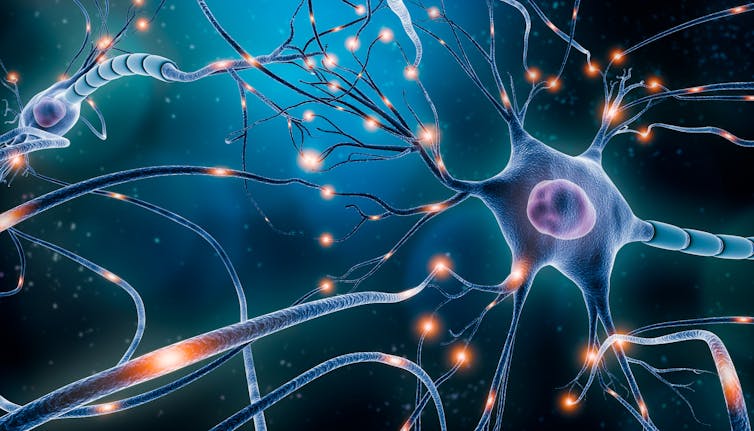
An artist's impression of neurons in the brain
The neural machinery of the brain may be all we need to study in order to understand the human mind. MattLphotography/Shutterstock

While itโ€™s clear that both the experience and content of consciousness are real, we argue that, from a science explanation, they are epiphenomenal: secondary phenomena based on the machinations of the physical brain itself. In other words, our subjective experience of consciousness is real, but the functions of control and ownership we attribute to that experience are not.

Future study of the brain

Our position is neither obvious nor intuitive. But we contend that continuing to place consciousness in the driverโ€™s seat, above and beyond the physical workings of the brain, and attributing cognitive functions to it, risks confusion and delaying a better understanding of human psychology and behaviour.

To better align psychology with the rest of the natural sciences, and to be consistent with how we understand and study processes like digestion and respiration, we favour a perspective change. We should redirect our efforts to studying the non-conscious brain, and not the functions previously attributed to consciousness.

This doesnโ€™t of course exclude psychological investigation into the nature, origins and distribution of the belief in consciousness. But it does mean refocusing academic efforts on what happens beneath our awareness โ€“ where we argue the real neuro-psychological processes take place.

Our proposal feels personally and emotionally unsatisfying, but we believe it provides a future framework for the investigation of the human mind โ€“ one that looks at the brainโ€™s physical machinery rather than the ghost that weโ€™ve traditionally called consciousness.

Peter Halligan, Hon Professor of Neuropsychology, Cardiff University and David A Oakley, Emeritus Professor of Psychology, UCL

This article is republished from The Conversation under a Creative Commons license. Read the original article.

Thought of the day 02-07-2016

p10104_thumbWe continue to emotionally and intellectually evolve as we grow older. For some this means embracing the child within and for others it may bring them to a point where they learn how to let go of the pain from their past. The problem with being a self-aware beings is we have a lot of luggage to carry with us through our life if we don’t learn to let go and to forgive. That luggage or baggage only wears you down it hurts only the one who is carrying it. To accept your life and all the things you have experienced during your lifetime is the first step in moving on. Yes you have been done wrong been hurt and more than likely you have wronged or hurt others along the path of life as well. Take it as it is accept both what you have done and that which has been done to you learn to let it go for what is the past is no longer a concern.

Being bitter mistrusting and full of anger fear and pain is no way for anyone to live. Being in such a negative way only blocks your ability to be love be happy and to live your life with integrity. Forgive those whom have done you wrong and yourself for the wrongs you’ve done as well. Remember only the lessons not the hate pain or remorse they bring. Today is a new day each day is yet another chance to live life to the fullest. Choose to live in the here and now not in the shadow of yesterday.


“It is just as important to forgive yourself as it is to forgive others.”

Raymond Barbier

Thought of the day 02-07-2016 was originally published on RJB Network Blogs

Thought of the day 1-18-2016

DSCF0012The journey of life has many ups and downs the longer you are on the path the harder the downs seem to be. Seems as we grow older we focus more of the negatives in life than the blessings and positives. Maybe this is due to the misperception that the good ย or better times are less often than the bad ones. This may be due to the way our brains tend to store the traumatic events vs its method of storing the rest of the experiences we have. It also could be due to a negative mindset some of us carry with us in later years. Regardless of the reasons behind the misbelief that there is less enjoyable times in our life as we age they are just as present and available as they were when we were younger.


Some science supports the idea that as we age the part of our brain that is stimulated by things such as physical pleasure and rewarding activities is less active or responsive than it is during earlier stages of life. What i wonder is if it is the same when it comes to the unpleasant and unfavorable experiences we have and the brain. More or less what once made our hearts sing and made us feel more alive when we were young may just be a slight and short lived bursts of the same or maybe no kind of reaction at all. But then one must question is it really the brain that is cutting of the high or is it the fact we don’t participate or engage in the things as much as we grow older so the body adapts to the changed lifestyle. I guess i will leave those questions to the people whom are more qualified to answer them.

All I know is that i shall do my best to enjoy my life as long as i can life is a blessing and is short so carpe diem.

Ray Barbier


Thought of the day 1-18-2016 was originally published on RJB Network Blogs

Just some random thoughts that came to mind on this Tuesday the 23rd of April 2013

IMG_1283So, This is the life you have chosen. Where you are and what your doing along with how your feeling is the result of all your choices in life both good and bad. You made your bed, guess now you have to lay in it. Wait, what? umโ€ฆ Not rightโ€ฆ You can always make choices now to change the course of your life and the bed you made can always be remade again. Some consequences you may have to face but then you can always move on afterwards and make a better life for yourself by making your choices more wisely. You are the master of your own life and destiny, you can always make a choice to change your life. Though sometimes itโ€™s a hard and painstaking task to take on, but it isn’t an impossible one.

First choice anyone has to make when trying to change their life is to not be a victim or defeatist., instead be an optimistย who will not allow themselves to be a victim of chance or circumstance. Unfortunately there is no magic bullet or instant fix when it comes to improving ones self and life,ย  it’s allย hard work. I look at it like this, anything worth having or anything worth seeking is well worth any effort that it takes in order toย obtain them. Choose to be and to transform into the person you want to be and make sure that what you choose to become is something you can both respect and live with.

Just some random thoughts that came to mind on this Tuesday the 23rd of April 2013

Ray Barbier

how am I going to contribute to this world today?

DSC_0338 I ask myself each morning, Who am I and what am I here for? Each morning the answer either eludes me or the answer I come up with is so vague and transient that it really isn’t a true answer. The best I can figure out is that I am here to live, to learn, to love and share that which I have been blessedย to have. So now I do not ask myself those questions anymore, I ask instead how am I going to contributeย to this world today? am I going to make a positive effort or will I be a non productive part of this world today? The choice is mine, how I react and how I contributeย to the world around me is my choiceย and can not be made by anyone but me.

ย How are you going to contribute to our world we live in and are you going to be a positive, neutral or negative force within the day of life?

Ray Barbier

One can dream can’t they?

HPIM0318Sometimes I just sit here and think about the evil things men have done in the name of God, for love, lust, greed and power. Then there is those that enjoy doing horrible things for pleasure, so much evil that is out there in the great big world. Then when I think there is no hope for us I remember all the great things people have done, the communities pulling together after a disaster, the people who dedicate their life to helping those in need of food, medicine and just a friend to care. Though the bad things we see seem to be more prominent in the world it isn’t so, they are the main things reported on in the media and recorded in history. Seems tragedy is a ratings booster and is good at grabbing someone’s interest more so than the good things that go on.

Unfortunately there are people who do horrible things, this has been a fact of life since the beginning of civilization if not humanity itself. But just the same there are many good people out there that do such wonderful and good things. The balance between the two tips back and forth through time rarely letting one stay prominent for too long. Hopefully one day humanity will mature and become a society that is prominently peaceful and compassionate.

One can dream can’t they? Well peace be with you

Ray Barbier

MATTLR.COM

3AM Questions that cut back

Sales Funnel Template

The Sales Funnel Explained

Mysterious Me

Just another WordPress.com site

Computer Vision Embedded

Harnessing the Power of Computer Vision in Embedded Technology

Optimal Happiness

Maximize Your Happiness, Well-Being, & Life Satisfaction

The Mind Connectory

Your Journey to Personal Growth Starts Here

Welcome to Huwspace

Here to share views and discuss the latest perspective's on the world going to hell in a handcart!

YourMindWithin.com

Change Your Life By Changing Your Mind

The Secret Truth About

The Secret Truth About Lifestyle Changes Is The Secret To Success

Fox Reviews Rock

Rock & Metal Reviews That Hit Hard

infoblogger.com

daily reaserch base article

Being Fit Start Now

The website Being Fit Start Now focuses on helping women, particularly those over 40, achieve their health and fitness goals from the comfort of their homes. It provides a variety of resources, including at-home workout programs, weight loss tips, and nutritional guidance. The site offers specific fitness routines, such as yoga workouts, full-body exercises, and specialized routines for reducing belly fat, all designed for different age groups, especially women over 40 and 50. Additionally, it features dietary advice, supplement recommendations, and healthy recipes aimed at supporting weight loss and overall wellness.

The Delightfully Resentful Sketchbook of Gladys Ruby

Failed Artist in Her Twilight Spreading Misery One Sketch at a Time.

Fairy who leaves the spirit world for the sake of love.โค๏ธโค๏ธโค๏ธโค๏ธ

read the book of the love fairy,๐ŸŒท๐ŸŒท๐ŸŒท๐Ÿ’–๐Ÿ’–๐Ÿ’

Mastering My Thoughts

My mind is running a marathon, so I write to relax and release.

Gospel road 66

Seeking truth in times of miss information

Life...Take 2!

I hope that someone sees this page and decides not to give up.

Bachir Bastien

Practical advice for a happier, fuller, and more meaningful life

marketingonthe.net/

Digital Marketing Directory, Tools & Info To Help You Grow Your Business

RazzWorks

Keep on Going - Keep On Growing

Slava Ukraini

Supporting Ukrainian

praktikotips

Wellness tips for healthy & happy living

Andrea, illustrator

Illustrations to make you smile, laugh, and sometimes make you see things from a different perspective ๐Ÿ˜‰

Happy Hub

Health, Wellness and Happiness Hub and Blog.

delishbymich

Custom Cakes, Baking and Recipes

Herder of Swine

Investigation of Misery and Joy

Tiktalkies

Let us cherish, preserve and spread the gift of knowledge

The Secret Sandbox

What are the differences between men and women?

BluntPathway

Honest path to a peaceful life

Iโ€™m Working on It

A mom on a journey to enlightenment

Estoreknight.com

Best Products To Buy at affordable price

Inner-voice

#truth #findingownself #quest #philosophy #contemplate

Tiger Riding for Beginners

Traveling Poet Philosopher & Occasional Wiseacre

Design a site like this with WordPress.com
Get started